It’s that time of year again in Western Pennsylvania to wallow in a superabundance of amazing Asian American film offerings. Harish Saluja and his friends, in the know on all things cinematic, especially of the international variety, are putting on a very friendly event called the Silk Screen Asian American Film Festival this May in beautiful downtown Pittsburgh, PA.
I had a chance to attend the first year of this program, six years ago, and even in it’s infancy, the films were great, the guest speakers were wonderful, and the crowd attending was particularly warm and friendly to out-of-towners like myself. I particularly remember enjoying the chance to chat a bit with Konkona Sen Sharma when she was presenting her film Amu, what an enjoyable film! And also, getting to dance at the opening night party with the star of Man Push Cart, Ahmad Razvi…guaranteed to give even the most jaded of us “aunties” a girlish thrill! If you haven’t seen the film, you definitely should, here. Enough said about past glories…here’s what’s on for this year!
The festival runs from the opening gala on May 11th through the closing on May 20th. The films they showcase span many nations and cultures, all of Asian American heritage. The films listed in the Festival Guide cover the cinematic globe from Malaysia, Indonesia, the Philippines, Turkey, Iran, Iraq, Korea, Vietnam, Japan and, of course, a few from India! I’m in heaven!
Those of you who have heard us rhapsodizing over Nawazuddin Siddiqui (Peepli Live, Kahaani) and Tannishtha Chatterjee (Road, Movie and Brick Lane), knows I’ll be there for Mangesh Hadewale’s Dekh Indian Circus, the story of a mother’s love for her children and the struggle to get them a rare trip to the circus. And I’m crossing my fingers that I’ll be able to attend Prashant Bhargava’s Patang, as well.
Trishna is director Michael Winterbottom’s (A Mighty Heart, The Trip–a hysterical film with Steve Coogan) update of Thomas Hardy’s “Tess of the D’Urbervilles” into the contemporary Rajasthani countryside. It’s a story of two lovers torn between different castes, plus a conflict of tradition versus the newly educated poor. Frida Pinto of Slumdog Millionaire stars.
Another one that intrigues me is Shala from director Sujay Dahake. It looks like a very cute coming of age story set in the 1970’s during the Emergency. School crushes rule destinies, in every country, it seems.
Delhi in a Day looks intriguing, too…though it’s not on a good day for me. Starring Lillete Dubey (KHNH, Monsoon Wedding) and Kulbushan Kharbanda (Lagaan, Monsoon Wedding) as the heads of a very wealthy nouveau-riche Indian family who rule over their household of very disorderly servants. Their world is turned upside down when the money of a naive British visitor (Lee Williams) disappears and they have to replace it. Directed by Prashant Nair.
And there are so many others…I wish I could catch them all. Hope I see some of you there, as well!
Since the local Hindi cinemas have been stuck in Houseful mode since Kahaani left town (and I have to draw the line, somewhere!) Julie and I have been digging back, on dvd, with our own “WayBack Machine” to see what we could have been watching in our elementary school days, if we had known what we were missing…and had been in Bombay. Wah! Wah! Wonderful!
Jenny K: I finished watching Namak Haraam (1973), the second film that Jayesh loaned me, and he didn’t steer me wrong! You and I are both an easy sell on Amitabh Bachchan films, and this has the bonus of being a classic Indian Bromance (aren’t they all!) opposite Rajesh Khanna. I hadn’t seen Rajesh in anything except cameo appearances in more recent films (Aa Ab Laut Chalen, the huge group number in OSO). Add to this a very, very young Rekha (practically didn’t recognize her without her now patented glamour look!) and well, what’s not to like?
The basic plot is predictable, but the performances make it well worth watching. Somu (Rajesh) is the poorer half of two best buddies in Delhi. The rich half is Vicky (Amitabh). Both have lost parents at a very young age, and the boys “adopted” the other’s to fill in the gaps. Vicky calls Somu’s mother and sister “Maa” and “Behen,” while Somu sees Vicky’s father as the hard-boiled business mogul he never had. They’d both gone to law school and were clerking at the same firm, until one got fired, so the other quit in solidarity. Vicky, despite his wealth, is a bit of a lost soul, and keeps turning to the bottle, drinking and going to see the nautch girls (in upscale joints, of course) and dragging Somu along with him to try to keep him on the ragged edge of the straight and narrow.
The trouble ramps up when Vicky’s father has a heart attack and asks Vicky to take his place as the head of the family millworks. He agrees reluctantly (too much like actual work) and leaves for home. Somu can’t handle being away from his Bro for more than a week or two and comes to join him. Vicky doesn’t know how to handle the union boss, Bipinlal (the omnipresent AK Hangal) and insults him, not realizing the union will go on strike. To end it, his father forces Vicky to apologize to Bipinlal, in public, advising him to revenge himself in secret, after the mill is operational. Somu offers to go undercover and undermine Bipinlal’s position from the inside…getting Vicky’s revenge by humiliating the older man.
It goes fairly well, until soft-hearted Somu finds “seeing how the other half lives” can be a profoundly affecting experience. Vicky had no idea what life-changing results would come of his seemingly harmless plans. Will they even still be friends at the end??? On Youtube for free…
Julie M: I’ve really gotten a taste for these heartfelt, 1970s “best buds” movies. It’s a part of Indian culture that I find very sweet, and something that’s just not explored enough here. Maybe because in the US there’s no way to talk about this kind of bond without bringing either sex or disgusting bodily functions into it.
Jenny K: Don’t speak of such things! Shudder…
The performances were good, as one would expect from a gifted “actor’s director” like Hrishikesh Mukherjee (Abhimaan), and our heroes made the twists rather touching, if not exactly surprising. Rajesh comes off a bit better, because he isn’t presented as a confused juvenile in an extremely long three piece suit. You never doubt Vicky’s feelings, but often doubt he’ll ever grow up. Somu definitely does. Spoilers in this video, but you see what I mean…
My favorite actor in a lesser role is Raza Murad as Alam the poet. Six foot three, with the rakish grin of a young Clark Gable when we meet him careening down a dark street, spouting his ghazals. Somu is attracted to him immediately, and so was I. The scene where he’s defending his neighbor’s wife and his final scene are both very touching, and I mean to keep a look out for him in some of his other films (over 270!). What a great voice and why haven’t I seen him before?
Julie M: Wow. Great performance in that clip. I’m glad you are getting into the glory that is Rajesh Khanna. We already spoke about how much I loved Anurodh, and tonight’s feature was Ajnabee (Stranger, 1974), a typical romance/thriller of the era starring lots of garish costumes and Rajesh Khanna’s perennially bad hair. No bromances, though—just good-old-fashioned thwarted lovers.
Rohit Kumar Saxena (Khanna) is the night stationmaster at a remote rail outpost, when his sleepy duties are interrupted by a young woman Sonia (Yogita Bali) rushing to get to Bombay. She misses the last train and he offers her his apartment, rather than having to sleep on the platform overnight. She agrees, giving him her attache case to hold in his safe: it is filled with jewelry given to her by her estranged mother. In his apartment she remarks on a painting; he tells her it was painted by his wife, from whom he is separated.
This disclosure prompts a lengthy flashback to the meet-cute between Rohit and Rashmi (Zeenat Aman), a young, attractive heiress. They accidentally re-meet at his cousin’s wedding, and he entertains the gathering with a story of how he met a girl that day (shades of Anurodh, 3 years earlier!).
Of course they fall in love. She is being pursued by her deceased sister’s widower Moti (Prem Chopra), who wants to marry her to keep his grip on the family’s fortune. Moti runs Rohit out of town but at the train station Rashmi catches up to him, and they elope to Bombay.
Wedded bliss ensues, but she soon grows bored at home and starts a modeling career to Rohit’s dismay. A tragic misunderstanding estranges the couple, Rashmi runs back to her father and Moti, and so Rohit takes his stationmaster position.
Back in the present, Sonia has turned up dead in Rohit’s apartment, and he’s charged with killing her to steal the jewelry. The case against him seems solid: will Rohit be convicted and never see Rashmi again? If not Rohit, who really killed Sonia and why? Will Moti succeed in his plan to get Rashmi and her money?
I found Ajnabee quite enjoyable. Khanna and Aman had great chemistry and made a very convincing couple-in-love. He rocked some awesome leisure suits (complete with pit-stains, chee!) and her wardrobe of flashy chiffon saris sometimes made my eyes burn, but I overlooked all that because of one number called “Satrah Baras Ki Chhokariyan” where she gets high on bhang and imagines herself in a particularly saucy dance performance. The thriller aspects are quite effective even with the horribly tinny soundtrack, and the pacing, quick. I’m growing an appreciation for Rajesh Khanna…Ajnabee is definitely worth a watch if you run across it.
Jenny K: Sounds like fun, even if I’m not overly fond of the Seventies ooh-ooh-ouvre.
Julie M: Oh, but you HAVE to love Zeenat. I haven’t seen her in much, but this has her all over it. By the way, this film shouldn’t be confused with the 2001 thriller by the same name, starring Akshay Kumar, Bobby Deol, Kareena and Bipasha. The newer movie has a character named Sonia who is mysteriously found dead and the lead character (Bobby) is accused of her murder, but that’s where the similarity ends. It’s not a remake. But the 2001 one sounds really cool, I love Akshay in thriller-mysteries, and I’ll have to try and find it. Or maybe I’ll just watch this video over and over.
Jenny K: I saw the 2001 Ajnabee and it’s a remake of Consenting Adults (1992). Let’s just say that Akshay (even with his oh-so-charming smile), Bobby Deol, and Kareena Kapoor can’t hold up to the original cast: Kevin Spacey, Kevin Kline and Mary Elizabeth Mastrantonio. With their combined acting chops, the earlier cast made even a fairly salacious film idea palatable. Consenting Adults is on Youtube, in pieces, for comparisons.
Julie M: I never saw Consenting Adults, but Kevin Kline…one of my faves.
Adding one more old movie to the list…I watched Teen Deviyan (Three Beauties, 1965). It must have been quite the sensation when it came out…but more on that later.
Plot summary: handsome Dev (Dev Anand) is an amateur poet who has just taken a job as a clerk in a music store and rented a room in a big house. As he is moving in he meets Nanda (Nanda), a feisty, attractive secretary who also has a room in the house, and they start a very close friendship.
Next, he has an automotive encounter with another woman, who turns out to be the glamorous and fun-loving actress Kalpana (Kalpana Mohan). They begin to see each other.
Then, on the job, he delivers a piano to the wealthy and sophisticated Simi (Simi Garewal), who takes an interest in his career and sponsors him–and they fall in love. As Dev’s fame as a poet grows, he continues to see all of the women and his relationship with each becomes more intense. Although he is happy seeing all of them, and they all know about each other, he feels that it’s not right to string them all along: he must choose.
Jenny K: Does Simi Garewal always play the wealthy and sophisticated girl who the hero doesn’t end up with? That could have been her character description as Manisha in Namak Haraam, too. Such a small, thankless part (the girl Amitabh’s father wanted him to marry) that I didn’t even bother to include her.
Julie M: Poor Dev. Equally in love with three beautiful women, and he can’t decide which one to focus on. So what else is there to do but see a hypnotist, who helps Dev look deep in his soul and find the girl his heart desires the most. I’m going to leave that part a mystery, but let’s just say it’s kind of predictable.
The thing about this movie is that nearly all the DVD copies leave out a key scene, the one at the hypnotist’s, where he sees what his life would be with each of his potential mates, that helps him makes his decision. Although the rest of the film is in black and white, this scene is in full color. My DVD did not have the scene: I’d love to find it, because as it played out it was kind of choppy–he is at the hypnotist, looks into a crystal ball and then BAM, he’s rushing out of there to find his true love. Everyone who’s seen it says that it’s freaky, amazing, and sufficiently weird to have caused a few social issues among the viewing public.
The most groundbreaking thing about this film is that it has NO FAMILY DRAMA AT ALL. No parents–all the characters are independent, modern grownups–and family considerations don’t even play into their decisions. Everyone is quite contemporary and urban, and the women are all forward and very sensual with no moral judgment implied for being so. Again, I can see why it caused such a sensation when it first came out.
I found the songs boring (except for one village scene where Kalpana lets loose and dances her heart out, and another where she wigs out at a party), but the relationships he has with each woman are fairly interesting.
The film is available free on YouTube but not with English subtitles. You’d have to pay $1.99 to get those, but it’s worth the expense to see this classic.
Jenny K: I don’t know…the world must be coming to an end. I watched Delhi Belly the other day and didn’t hate it near as much as I thought I would. Yes, it’s disgusting and gross, just like I thought…practically a Hindi Dumb, Dumber and Dumbest. However, it was pretty tightly scripted for one of those things, and the cameo appearances were good. I especially liked Vijay Raaz (Monsoon Wedding) as Cowboy the thwarted drug baron. He was really evil in a very charming way. And, even covered with plaster dust, Imraan is always Imraan.
Short synopsis. Three slacker friends live in one incredibly dirty apartment in Delhi. Taashi (Imraan Khan), the semi-normal one, has a very rich girly fiancee, Sonia (Shenaaz Treasury). Sonia smuggles something into the country, as a favor for a friend. She has no idea what she’s carrying. She passes the delivery on to Taashi, who is very busy trying to be a “real reporter” not just a gossip journo, and passes it to his photographer and roommate, Nitin (Kunal Roy Kapoor), who has eaten something dangerously bad (any roach-riddled thing in their kitchen!) and is nursing the worst case of Delhi Belly on record. His bowels play the actual soundtrack to the film. Almost not kidding.
Due to his frequent emergency dashes to the loo, Nitin passes the delivery on to their other roommate, Arup (Vir Das) an unassuming cartoonist, silently seething in incipient anarchy against his boor of a boss. At the same time, he’s to deliver Nitin’s stool sample to the doctor’s office, and, of course, mixes up the two packages and delivers the crap to the drug baron. The whole rest of the movie is the plotting that goes on, trying to trade the drugs for hostages, money, etc. And it’s pretty fun, if gross, to watch. And yes, Aamir’s cameo at the end in “Return of the Disco Fighter” is fun, but not really necessary.
Julie M: I’ll watch for it at my library but the out-and-out Indian comedies tend to make me squirm, and I’m not a fan of extended poo jokes. I can barely stand the comic-relief characters in more serious movies. Yes, I’m looking at you, fat guy from Bodyguard. But having said that, the trailer looks fun. Unless it’s one of those situations when the trailer shows all the good parts and the rest is just bad. Like almost every Judd Apatow movie.
Jenny K: No, it’s definitely better than those…trust me. I’m not a full-out slapstick fan, either.
Julie M: My recent film was Road, Movie (2009) with (sigh) Abhay Deol, who I had wanted to see more of every since Zindagi Na Milegi Dobara, my first experience with him. Road is a great “film festival” type film, full of finely drawn characters and beautiful cinematography, a main character who finds himself during a journey, and plenty of heart. Here’s the trailer.
Vishnu (Abhay) is a young, middle-class city dweller who yearns for more out of life than slotting into his father’s barely-there hair-oil business. When his uncle needs to transport his old mobile-cinema truck to a museum on the other side of the country, Vishnu jumps at the chance for a solo road trip and maybe some adventure along the way.
He picks up a young runaway (Mohammad Faizal) who is his complete personality opposite, and when the truck breaks down an elderly mechanic (Satish Kaushik) bails him out for the price of a ride through the Rajasthan landscape. They get lost and wander without food or water, get picked up by the cops for having no papers, meet a gypsy woman (Tannishtha Chatterjee) on the run from an evil water-lord (Yashpal Sharma), conjure up a carnival and, like Sheherezade, find that they constantly have to show films in order to live for another day. By the end Vishnu learns to appreciate friendship offered with no strings and realizes what being a man really means.
In addition to lovely, quiet performances from the stellar ensemble cast and constant, very lush visuals (including Abhay Deol), Road, Movie has some great stuff to offer the Bollywood film fan. I counted clips from no less than five classic films I had seen including Deewar, Umrao Jaan and Pyaasa plus many others I have not yet seen. In fact, hair oil as a theme and metaphor pops up throughout the film, not in the least of which is through the wonderful song “Sar Jo Tera Chakraye” from Pyaasa, which gets a pop remix in addition to showing the original number. Here’s the music video.
The film moves fairly slowly and the camera lingers on the landscape and Deol’s sweaty, dusty frame far too often—I mean, often enough for me but maybe too much for someone else—however, I would recommend it for a nice change of pace away from romantic comedies and gangster shoot-em-ups. And it’s only about an hour and a half investment of one’s time.
Road, Movie is available free on Youtube, unfortunately without subtitles.
Jenny K: I watched Road, Movie on Netflix and it was an unusual one. I loved the dreamy, almost surrealistic quality of the road trip, with the women with the water pots on their heads appearing every so often, from nowhere without notice. I liked Abhay Deol and all the leads, especially Satish Kaushik as Om, were very good at their roles. The visuals were mesmerizing, with the director, Dev Benegal and the cinematographer, Michel Amathieu painting color-drenched murals behind the silhouetted truck. Remind me never to go to that endless plate of sun-parched salt where the mela “appeared”…I shuddered just looking at it. Why would I want to go there? Why would they?
That is, in a nutshell, what the problem with this film is for me…dreamy as it is to look at, it didn’t make much sense. And the nonsensical quality wasn’t whimsically charming, as perhaps what they were going for, it just interrupted my “suspension of disbelief,” so often it became mildly annoying.
Why was Abhay’s character so clueless? He didn’t seem actually stupid, yet seemed set on alienating all of those best placed to help him on his trip. Why, if he’s so self-absorbed, would he agree to keep driving for what seemed like days at a time, aimlessly into the desert, until they were all but dead from dehydration? And in the middle of nowhere…where did those carnival folk come from, and go to? Were they there at all? Who knows? Oh, dear. I’ve never liked magic realism much…
Julie M: I guess that’s another difference between us. I was perfectly willing to suspend my disbelief and just enjoy the scenery (including Abhay), and let the possibilities wash over me. I’m not even 100% sure the carnival was real—it might well have been a thirst-induced hallucination—and I felt that the dry, endless desert represented how Vishnu perceived his life, dull and devoid of joy, and these other characters were personifications of lessons he had to learn in order to bring himself back into balance…the filmmaking technique certainly could lead one to think in that direction.
I have to interject at this point, briefly, that after Road, Movie I saw Brick Lane (2007), also with Satish Kaushik and Tannishtha Chatterjee, this time as a Bangladeshi immigrant couple living in London with their children. Here’s the trailer.
Brick Lane was a dazzling showcase for Tannishtha’s talents, and both of them acted extremely well and almost entirely in English. Overall, though, I found it not nearly as fascinating as the book. A.O. Scott from the NYT agrees with me. And that’s all I’m going to say on that. It’s available online, for $2.99 on YouTube.
[after a few more days]
Jenny K: Pat and Kathy and I tiptoed through my Netflix queue the other day and gave into Pat’s not-so-secret crush on Shahid…we put in Kismat Konnection (2008), and only lasted about fifteen minutes before she herself was screaming for a change. Part of it was, I will admit, the Netflix subtitle cut-off problem on my tv. However, the plot was so weak, that I’ve blocked the whole thing out of my mind.
Julie M: I found it on YouTube, free, subtitled, in parts. Maybe this will solve your subtitle issue, but not the screamingly bad issue. So you’re saying that I should nix my own Shahid leanings and avoid it, eh? Pity.
Jenny K: Well, you seem to be willing to overlook his weaker movies, if he’s cute enough…so, you might still like it. We ended up ditching Shahid in favor of Aisha (2010) also starring our boy, Abhay Deol. It’s an adaptation of Emma, the novel by Jane Austen…or rather, it’s a remake of Clueless (1995) which was a better adaptation of Emma.
The star, Sonam Kapoor, was less absent than she was in Mausam (but still as giraffe-like) as our rich girl Emma, I mean Aisha, gleefully filling her idle hours as a matchmaker to her shy, lower caste friend Shefali. It wasn’t obvious to a non-desi like me what was so low-caste about her; Shefali seemed nicer and prettier than our Emma’s crabby best friend Pinky (Ira Dubey), and so we lost a critical bit of the plot motivator, IMO. And because her father was not a stay-at-home recluse, why didn’t Aisha want to get married herself? No clue.
Abhay played their version of Mr. Knightley quite well, but wasn’t really old enough to convey the “surprise” element of their romance. He wasn’t any kind of guiding/restraining hand for Aisha as Knightley was in Emma. They still fought cute, but you were mighty good and ready for them to realize their mutual affection, well before the end. Most of the supporting cast members were interesting, if not earthshakingly so. I particularly liked Arunoday Singh as Druv (the putative Frank Churchill) who was not nearly as reprehensible in his behavior as FC in the novel. Arunoday was quite buff and dapper with his red shirt and the spiffy Panama hat he wears in the dance number below. He has a better looking Gregory Hines thing going on.
So, I liked Aisha, on the whole, as I like most BollyAusten remakes (Bride and Prejudice, Kandukondain Kandukondain), but thought it could have made the connections a bit tighter and therefore clearer. I can’t even fathom how a plan to fix up Shefali with her “Mr. Elton,” Randhir (Cyrus Sahukar, who isn’t as big a dud as he should be), could consist of stranding the two of them alone at a hotel and making overnight reservations for them…in INDIA? WTHeck was Aisha thinking would happen???? Nice kids, they walked home, understandably tired and grumpy about her treatment of them. Clueless, indeed…
Julie M: I have to come clean and admit here that I am SO not an Austen fan and have never read Emma. I did see Clueless, though, so am somewhat familiar with the story. I have tried to get through P&P at least four times and not made it past the first few chapters, and perish the thought of anything else like Sense and Sensibility (although the recent version that adds sea-monsters might be more to my liking). So anything Austen, or twists on Austen, whoosh right over my head at least in their comparison to the original. I loved B&P, loved KK, and maybe I loved them more because I had absolutely no expectations.
Jenny K: Not like Austen? Are you sure you’re a girl?? Does B know??? That sea-monsters comment is a dead give-away, BTW. Next you’ll be asking for zombies in Devdas!
Julie’s been somewhat of a basketball widow this past couple of weeks, which gave her lots and lots of time to catch up on films!
Julie M: B was working and watching basketball tonight, so I took the opportunity to watch Kashmir Ki Kali (Kali of Kashmir, 1964). It started out like a typical Shammi romp, where he is a wealthy, irresponsible playboy goofily chasing a shy, beautiful village girl, whom he almost gets until an impossible amount of drama in the last 30 minutes threatens their happy future together.
Jenny K: Yes, I liked that one, too…it’s always been touted as one of his best. And of course, set in Kashmir…how can you resist?!?
Julie M: Rajiv (Shammi Kapoor) is the reckless heir to a wealthyDelhi industrialist. One day Maa decides to pick him a bride so he’ll settle down; he rejects all the choices and flees to the family’s other home in scenic Kashmir, where he meets Champa (Sharmila Tagore), a poor flower-seller with a blind father. So as not to scare her off he pretends to be the homeowner’s driver (hm…where have I seen THAT before?) and chats her up, then finds numerous occasions to be with her and pitch adorable woo, mostly in song. This one was my favorite.
A particularly hilarious scene has him dressing up in a burkha so he can ride with her and her friends as they travel to a village fair, and there is a crazy sub-plot involving three comely lasses who have rented rooms in his home and are chasing his wealth (that part could have lifted right out as far as I was concerned). There’s also a wonderful dance number at the above-mentioned fair, full of ethnic goodness, although what a Punjabi folk dance is doing in a Kashmiri village is beyond me.
Since I had already seen the disarmingly similar, An Evening in Paris (1967), also with hammy Shammi and Sharmila, I kept having flashbacks–or flash-forwards considering it’s a later film. Though clearly typecast, Shammi is so silly and sweet that I forgave almost everything. Also, this film is worth watching because of the elaborate jewelry, second only to Paheli in films I’ve seen. Overall: fluffy, fun, a thrilling scene near the end with Shammi getting all dishoom on the bad guy and wrestling with him on an elevated rock transport system…what more do you want?
Kashmir Ki Kali available free on YouTube, with English subtitles.
Jenny K: I, who never let basketball bother me, watched Bikini Beach today while getting some housework done. Ah, that Frankie Avalon, winning the fair Annette in a double role, as both himself and, as his own rival, Potato Bug, a goofy British hearthrob of a singer (a Chad and Jeremy type), who also drag races. I just watch it for Eric Von Zipper. When EVZ likes someone, they STAY liked! In no way deep, but I’m a sucker for fluff, every so often. This may be why I was predisposed to like masalas.
Julie M: I think the 1960s are the 1960s no matter where. I love how Indian films reflect the music of the time, all the while staying true to Indian mores and values.
[the next day…still during the basketball tournament…]
Julie M: Saw Morning Raga (2004) tonight. LOVED it. It had everything–fantastic music, dramatic storyline (but not too), fabulous performances. Prakash…what a hottie, too bad he didn’t do more work. And Shabana “sang”! I loved that it wasn’t “mainstream,” that the pacing was perfect, visually stunning…I can’t say enough. Just my kind of film. Thank you, thank you for sending it.
Brief plot summary: Swarnalata (Shabana Azmi) and Vaishnavi (Ranjani Ramakrishnan) are best friends and musical partners, singing traditional carnatic (South Indian) pieces in the privacy of their homes (this piece is the opening of the film).
Swarnalata convinces Vaishnavi to perform publicly with her, but a tragedy en route changes the lives of both families. Twenty years later Vaishnavi’s son Abhinay (Prakash Rao), an aspiring musician, returns to the village and encounters Swarnalatha, and wants to incorporate her and her music into his band. Swarnalatha, still blaming herself for the tragedy, refuses. Can their mutual passion for music overcome the horrors of the past? And what role does Pinky, Abhinay’s new girlfriend, play in the story? Click on the Youtube logo, bottom right, if it doesn’t play.
Jenny K: Morning Raga was all part of my minifest “movies about playback, and concert, singers”. It was a nice little movie…but, Shabana didn’t sing any of it herself, you know. However, all the reviews I have read said they thought she had studied a lot to get the whole set of performance mannerisms right and the lip synch just so. Quite a feat!
Julie M: Yes, apparently she did study, for months, as did Prakash learning to play the violin (even though it wasn’t his playing in the film). I admire that kind of commitment.
And…I was listening to a library CD on my walk this morning and a fusion song came on that had long bits of carnatic music in it, and now I know what it is!
Morning Raga is available free on YouTube. It’s mostly in English, and the small bits that aren’t English are subtitled. Part I is here.
[a few days later..still more basketball…]
Julie M: Saw Maqbool (2004) tonight. I was really leery of seeing it because of the gangland setting and I kind of wish I had listened to myself, because despite the excellent performances (Irrfan was fantastic!) it was really bloody and violent.
I like how it played with the parallel characters from MacBeth: instead of two sons Abbaji (the King Duncan character) has a daughter, which set up a whole other dynamic re the succession. Lady MacB is not a wife but a mistress, the mistress of both the King and Maqbool, again upping the drama quotient and changing her motivation from ambition for her husband to simply getting rid of a lover she does not love to exchange for one she does love, while still keeping her position. This scene, where she holds a gun to Maqbool’s head and forces him to call her “my love,” is key to her twisted psyche.
Jenny K: That’s what bothers me the most about Maqbool, when they make Lady MacBeth the mistress, then in this film, Maqbool’s whole motivator is sex, not power and greed as in MacBeth. That bothered me more than, say having “Emilia” [spoilers] not die in Omkara, but in the end, flip the Shakespeare on his head and have her kill her Iago. Shocking, but less fundamentally a change to the plot.
Julie M: I also loved this quwwali song at the gangland funeral.
And I loved how the “witches” are brought together in the single person of the soothsaying cop (Om Puri) and his jovial sidekick (your boy Naseeruddin Shah).
The visuals were good and I suspect would have been better if the DVD had not been mastered from a bad VHS original. Still, all that blood and shooting really soured what could have been a really satisfying drama. Overboard, to my tastes.
This was a welcome light moment, at the engagement-party festivities for Abbaji’s daughter.
Jenny K: I’ve always liked Omkara better than Maqbool of Vishal Bhardwaj’s Shakespeare adaptations, primarily because Maqbool is soooo dark. I thought as you like Irrfan so much, it was important that you see it. It may not have been his first film, but it was one of the first two that really put him on the map, cinematically. The first was The Warrior by Asif Kapadia. I haven’t seen it, but it has great reviews. I can’t believe that he didn’t “hit” until he was about 40. He still looks so great and as busy as ever at 50!
Julie M: Omkara certainly gets my vote, too, for the better of the two. It was nice to see Irrfan and Tabu act together again. I loved the two of them in The Namesake (2007), which I saw first, but I can’t help but think that their casting in Namesake was inspired by their undeniable chemistry in Maqbool. Excellent, mature actors serious about their craft. LOVE to see that!
[the next night…isn’t that tournament over yet?]
Julie M: Saw Kairee (Raw Mango, 2000) tonight. Very indie, very good.
A young city girl (Yogita Deshmukh) arrives in a rural Marathi village to live with her beloved aunt Taani (Shilpa Navalkar) after the tragic death of her parents. At first she is happy in her new life, since she gets to spend a lot of time with her aunt in the beautiful setting. But soon she must go to school, which is taught by an incompetent master and where she is the only girl. She is made to feel bad but is cheered by her aunt’s standing up to the master and getting her transferred to another school where the education is better, the master is friendlier (a stuttering Atul Kulkarni) and there are more girls. But, gradually she finds out that things are not what they seem in her idyllic new life. [Sorry, no subtitles.]
It was a very beautiful movie visually, with excellent performances by Shilpa (such an expressive face, especially when she laughs!) and Atul (good to see him NOT be a villain for a change), and a cameo by Sonali Kulkarni (of Mission Kashmir and Dil ChahtaHai) as the grown-up girl.
Lots of cryptic references to finding the local peacocks (which the girl never gets to see: I’m not quite sure what the symbolism is, maybe happiness?) and eating raw mangoes fresh from the tree (which I believe represents perfection), a favorite treat of Taani’s which the girl also never gets to experience.
Jenny K: Atul is one of my favorite character actors. He’s given some great performances in Rang De Basante, Chandni Bar, Khakee and this one. And all so different. Amazing. He never just “phones it in” as they say. Definitely you’ve picked some wonderful basketball distractions. Two points…swooosh! Into the hoop!
Julie M: Your long post put me in the mood for a romance, so I went with Alaipayuthey (Pouncing Waves, 2000). Mani Ratnam and A.R. Rahman should always work together…even though the second half was WAY too overwrought for me, I thought overall it was pretty decent except for the music, which was AMAZING, and the visuals, which reminded me a lot of Dil Se (duh) and were therefore stunning. Since this was the original Tamil film of which Saathiya (Life Partner, 2002) was a remake, and I’ve never seen Saathiya except for the number you indicated as one of your Valentine’s Day romance songs, you’ll have to clue me in on which you thought was better.
Jenny K: Oh, I’m always going to think that Mani Sir directing his own screenplay is going to be the better…not that I didn’t find loads of things to like about Saathiya (can you say Rani…so cute you could eat her up!) but I liked that not everyone in the Tamil version was so gosh-darned well known. It felt like I was getting to peek in on someone telling their own love story…very intimate and endearing by not being so slickly produced. I also had a bit of a problem with Viveik bouncing around in the fields with his color-coordinated backup dancers…that was not as blatant in Alaipayuthey. Just my opinion.
Julie M: Alaipayuthey is the story of two people who fall in love, get married and then wonder what happened. Karthik (Madhavan) sees Shakti (Shalini) at a wedding in her part of the city, and instantly decides she is the one for him, dreaming of her all the time.
He woos her all over town, stalking her commuter train and professing his love for her until he eventually wears her down and she admits she loves him too.
Unfortunately, their parents do not hit it off due to class issues so their desired marriage is forbidden—of course they get married secretly, and vow to tell their parents “when the time is right.” Shortly thereafter Shakti’s older sister Poorni (Swarnamalya) gets an excellent proposal and the groom’s father offers his younger son to Shakti; panicked, she spills the beans about the secret marriage and the groom’s family calls off the match. The couple’s parents kick them out and they take up illegal residence in a partially-demolished, charmingly decrepit apartment building that they fix up and are blissfully happy in…for a while. This number (the original from the “Aye Udi Udi” one in Saathiya) is so cute, and I really love the backwards-film trick.
Jenny K: I wonder if it’s a Ratnam thing, or if it’s his cinematographers preference for this backwards filmwork? Not that I don’t like it, but he seems to use it a lot. Dil Se had it, too in “Satrangi Re” (yellow dress at2:50 in this video).
Julie M: Then they start to fight about little things, and when Shakti’s father dies before she can reach him she blames Karthik. Eventually they become strangers to one another, and to keep some type of contact with her Karthik arranges to bring Poorni and her ex-groom-to-be back together. Shakti sees Poorni and Karthik together and misunderstands Poorni’s grateful embrace, and she runs off. [Spoilers follow. Highlight to reveal.] Once Poorni explains the truth to her she tries to get back to Karthik, but on the way to the train station is hit by a car. As he waits for her train, then roams the city looking for her, he flashes back to how it all began and how much he loves her. He eventually finds her in the hospital where she is unknown and unconscious: his presence rouses her and she professes her love for him too. They realize that although marriage is hard, their mature love will help them make it through. [end of spoilers]
The movie had me in the palm of its hand right from the opening number, where Shakti and her family are getting ready for the wedding:
Like I said, the second half was overly dramatic for me, but the first half was sweet and the music (with the lovely picturizations) totally made it all worthwhile. And this was Madhavan in his debut film, after already being known for TV work. I really like burly-ish men and he’s so cuddly and sweet in this. He really is one of my filmi crushes. I read online that he re-watched this film and was amazed at how skinny he was back in 2000—to me, he’s only gotten more handsome (he was great as the dad in Kannathil Muthammittal, too)!
Jenny K: And didn’t you love Arvind Swamy’s guest appearance at the end there? His scene with his wife was so moving. He seems to have been one of Mani Ratnam’s go-to guys, using him in Roja and Bombay, and even in early ones like Thalapathi (that I haven’t seen yet…no subtitles). He was even in that Kajol/Prabhu Deva film, Minsaara Kanavu(Hindi dub – Sapnay). This one was his last screen performance, though, unless he’ll be doing Mani Ratnam’s next film, as rumored. He gave up films and went into business. A loss for us, he really had a gentle presence.
Julie M: I love the fact that in Tamil films, they cast actresses who look like human beings rather than pretty models. I was not a huge fan of Shalini, or, rather, her character Shakti, who was pouty and hard to please even though she was supposedly in love with Karthik. And totally no backbone for standing up to her family even though she was supposedly spunky. Sorry, didn’t work for me.
I also didn’t like this number, a beach party with friends where Shakti expresses her displeasure with Karthik. I thought it was too much pandering to pop culture, although it’s not as bad as the Saathiya analogue song, “Chori Pe Chori”. Eccch.
Jenny K: Then we’ll just link to them, rather than showcase them. No need to needlessly distress the readers. Warning:Go further at Risk of Exposure to Pandering! LOL
Julie M: My final peeve was [Spoiler] the assumption that an accident will instantly bring about mature wedded love. [End] We all know (well, those of us who’ve been married for two decades) that it’s the day in, day out of being with someone and relying on them that makes it happen. But, it’s a movie, and overall I thought it was pretty good although Saathiya won all the awards.
Jenny K: Now do you know that for sure? The Filmfare Awards have a separate show, entirely, for the Southern film entries…I know Rahman won one of them for his score, and it didn’t win best picture that year, but, it did pretty darned well from what I can tell on the international filmfest circuit. Mumbai isn’t everything, after all.
Julie M: So, which is better: Alaipayuthey or Saathiya? I can tell you, I’d much rather watch R. Madhevan than Viveik Oberoi, and Rani Mukherjee than Shalini. But otherwise they seem nearly identical. So why remake? To gather the Hindi audience who doesn’t speak Tamil?
Jenny K: You hit it on the head…I can’t tell you how many times I’ve spoken with desi audience members who speak Hindi (or Punjabi or Bengali) who tell me they will never go to see Tamil films because they’d have to read subtitles (assuming they have them!).
Nowadays, Mani Ratnam tends to film both films simultaneously in Hindi and Tamil to combine, save money and still retain creative control (Yuva, Raavan, etc). And almost without exception, I prefer the Tamil versions. Less polish, more grit always makes it seem more realistic, even if they do keep bursting into song. And though it’s a close thing, I think the Tamil lyrics “fit” the Rahman music better than almost any Hindi they put to it (sorry Gulzar, no disrespect intended). It just seems to flow a bit easier, as if it’s written with the Tamil in mind and then the Hindi is made to fit, and so it’s a touch more awkward. Could be just me, but I’d bet money the Tamil lyric always comes first.
[a day or so later]
Jenny K: New Vidya Balan flick out this weekend…Kahaani (Story, 2012)…looks like an eerie psychological thriller…sounds just up your alley! The last shot…very creepy….
Julie M: Oooooh. It’s here in my local, too. Unfortunately, spending $10 at the movies at this time is not in the cards. I’ll have to wait for the DVD or online streaming version.
[Later in the week]
Jenny K: Gosh, I’m sorry you won’t be able to see this on the big screen. Kahaani is what Hindi cinema has been aiming at for a long time, in that it’s as polished as any Western suspense film, but maintains a very vivid, convincing sense of itself and the country that it springs from. I was completely drawn in.…It’s sort of a Hitchcock suspense film, with bits of John le Carré or Graham Greene thrown in for the politics and paranoia. Who’s the villain?…I mean, are the villains??….Wait, are there villains? Or am I crazy? Where’s Kim Novak in all of this? Or Jimmy Stewart? This feels like a classic in the making, full of ambiguous motives and danger galore. And the ending succeeded in surprising me! Imagine that…Wonderful.
The plot is fairly simple, Vidya Balan plays Vidya Bagchi, a talented computer programmer who has come to Kolkata to find her husband, Arnab, who’s gone missing after two weeks of working there on another computer project. Vidya is very, very pregnant, and is determined to not let the red tape of Bengali police and politics keep her from finding her man. She’s a tough lady under her everpresent maternal glow, and no police official can ignore her, or if he does, it’s very unwise. She’s befriended by one particular officer, Inspector Satyoki Rana (an endearing Parambrata Chattopadhyay) who aids her search, even at the risk of losing his job…and his heart to her.
Vidya seems to be going as quickly backwards as forwards in her search. No one seems to even know her husband was there. One person thinks that Arnab looks just like one of her ex-employees…but why is he “ex”? No one knows who or where he is, either. If Vidya finds a lead, the next thing she knows, that person is dead. Who is killing them? It can’t be that harmless looking man from India Insurance, can it? Bob Biswas (Saswata Chatterjee) looks too much like Jim Broadbent to be evil, surely? Is it the master manipulator A. Khan, who is so mysterious that he has no first name? Or might the big boss, Dhritiman Chatterjee, (ooh, I loved him in 36 Chowringhee Lane, and Black, too) be blocking her hunt for political reasons? Well, let’s just say that the red herrings flow as fast and furious as color on Holi.
Kahaani is a sensual experience. The cinematography envelops you in the city of Kolkata, so that you can almost taste it. The shots of the Durga Pooja alone are worth the ticket price. The music by Vishal/Shekhar is interesting, diverse and juxtaposes the past and the present seamlessly. No real production numbers, yet the edgy quality carries the plot very well, as in this song.
Vidya’s performance is masterful, as expected. She plays with the camera like a virtuoso, and keeps all her mysteries to herself while making her character very identifiable at the same time. How does she do that?
But the newsmaker in this film is Nawazuddin Siddiqui who plays A. Khan, a government higher-up who really steals your attention every time he’s on screen. He was good as the young reporter in Peepli Live, too, but I didn’t recognize him from it until I looked him up. I may now have to find a copy of Patang, as well, to watch him in it. Sigh, it’s an indie film, it’s going to be a difficult “get”. Here are two short articles on him, in the Times of India and the Deccan Chronicle, the latter is better.
Julie M: Peepli Live is on my list of recent movies to find and watch. The very LONG list!
Jenny K: You might even call it…wait for it…a Hit List! But please don’t. I’m still looking over my shoulder….I may never sleep quietly again, at least not in Kolkata.
Jenny K: It seems all that I’m drawn to recently are prem kahaniyan, or in the gori vernacular, love stories…granted, not traditional romances, but in theaters or out, that’s what I’ve been watching. Here is my take on three of the most recent winners in the “luv stakes” races.
First was “in theater”…three weeks back, some of my Hindi Movie Pack and I went to see the latest Imraan Khan film, Ek Main Aur Ekk Tu (One Me and One You, 2012). It was an almost sweet, not-quite-meet-cute, shot at romantic comedy that has Imraan depicted as an NRI “good boy” whose life ambition is to get along calmly and with as few disruptions to his life (and his parents’ wishes) as he can deliver. He has gone into his parents’ chosen field for him, architecture (they own a construction company) and is now serving his lowly intro-level years at a prestigious firm in Las Vegas.
There he meets Quirky Free Spirit, hairstylist Kareena Kapoor at a shared psychiatrist’s office, and she disrupts his life plans (and ruins his haircut!) forever. In the course of trying too hard to prove himself “not boring,” they tie one on and wake up married in a handy Las Vegas wedding chapel! The rest is how they wend their way out of this mess. This is the first anti-shaadi film I’ve ever seen.
I find it interesting that in the trailer they begin with those really early era graphics, because all through the film I kept being reminded of early Cary Grant films, you know, the ones with Kate Hepburn leading Cary around by the nose into one crazy scrape after another, and doing some of those almost patented double-takes, that Imraan seems to be born to wear, too. No, seriously, it’s also a physical resemblance…the height, the dark hair with the widow’s peak, the dimple in the chin…go check the old still pictures from the 1920’s and ‘30s!
Not that Kareena is quite a Kate Hepburn, but I found, as the film unrolled, that I was interested in how their lives would untangle and if, indeed, they would end up together. No, I won’t say. Just that I enjoyed the ending, and didn’t want to scream at the screenwriters. Nice change. Also liked this number, where the action has moved back to India and the whole family (hers) has gone out to an “old fashioned” New Years Eve celebration at “the club,”dragging him along. I’m still in mourning for his Cary Grant-ish haircut.
Julie M: I love cute rom-coms too, and have been craving one. Last one I saw and really liked, unequivocably, was a while back, Pyaar To Hona Hi Tha. And one of my favorite rom-com genres is “got married too soon,” (made famous on TV by Dharma and Greg). I missed it in the theater, but EMAET is one I will watch for as a library DVD. Kareena did not annoy me in the trailer–let’s hope it’s as enjoyable as Jab We Met (my fave Kareena rom-com). And was Farah Khan the choreographer for “Aunty Ji”? because it’s just her style.
Jenny K: Not Farah…she’s really only directing now, and choreographs for her own films, and Shah Rukh’s occasionally. This one was a guy named Bosco Martis and another one named Rajeev Soorti is listed, too. Bosco is definitely in this making-of video.
Julie M: My research reveals that one of the location shoots was in Pataudi…the home princeship of Kareena’s intended, Saif Ali Khan. Hmm…
Jenny K: So, next on my oddball romance mix, was Dil Bole Hadippa! (The Heart Says Hurray! 2009) which put the balls in oddball…cricket balls, that is. You wouldn’t think that a cricket romance would be too unusual in Hindi film, Lagaan, right? But this one adds a cross-dressing twist. Rani Mukherji plays a cricket-mad Punjabi girl from Amritsar named Veera, who has always had a dream to be able to play on a national team but her gender stops her, despite her proven “mad skills” on the cricket field.
One day after being turned away from tryouts, yet again, she goes back to her home with the troupe of wandering players she lives with and has to do a “trouser role,” off the cuff, if you’ll pardon the pun, to stand in for an actor who is falling-down drunk. Translated lyrics are under the original Youtube post.
That she pulls this off successfully leads her to hope that with a little more work she can fool the newly arrived, London-bred son of the team owner who is now coaching his dad’s team. Shahid Kapoor plays Rohan, the tough-to-please coach who fails to recognize his newest phenom, “Veer” as the girl he’s both fighting with and romancing at the local fair; he thinks she’s “Veer’s” twin sister. Ah, the things we swallow for a fun romance with lovely big dance numbers like this one.
I think that this is the most attractive persona that I’ve seen Shahid wear yet. Maybe because he’s not trying so hard to please, as Rohan’s natural disposition tends toward cranky. He sure can dance, though, and even delivers a convincing performance throughout the culminating cricket match where he gets to exercise those impressive biceps, and even does a creditably cute DDLJ Raj impression for Veera.
Julie M: Again, another difference between us. I don’t mind Shahid at all, and he’s proven he can do Punjabi-milieu, dance, comedy and romance, in Jab We Met (a seriously underrated film in this genre). Dil Bole Hadippa! is another on my list of “to watch” given my insane fangirl admiration for Rani; however, since it hasn’t hit my library yet it’s not gonna. Guess I’d better find a place I can pay $3 to stream it. And you know you got me with Shahid’s dancing, and all the bhangra beats.
Jenny K: Well, you don’t have to look far…Yashraj Channel at Youtube, $1.99…
The final leg of my romance trifecta, is an old one, Aandhi (Storm) from 1975. My pal Jayesh loaned me two films, and this was the first one that I got to, and boy was it unexpected. One of lyricist Gulzar’s directorial efforts, this must be his best to date. I’d seen his atmospheric ghost story with Vinod Khanna and Dimple Kapadia, Lekin… but haven’t actually finished it. I always thought that it was a bit too lyrical for my non-poetic soul. This one, on the other hand, was delightfully mater-of-fact for a romance. And it is telling the tale of a mature couple, Suchitra Sen and Sanjeev Kumar, who find each other again after years apart, all wrapped up in a story of political aspiration and machination. Extra bonus!
The story begins with Artidevi (Suchitra in her second to last film) as a political force who is facing a troubled reelection campaign. Her campaign managers don’t know how she, a Ghandian pacifist, is going to fight her rivals who control the newspapers and the funding of the business elites if she insists on fighting a clean, honest campaign. She goes to another town where a rally is to be held and moves her headquarters to a hotel there. She feels oddly at home there, and finds that the manager of the hotel is none other than her estranged husband. She left him years ago when her desire for political office couldn’t be sated with a simple home life as a wife and…egad…mother! Surprise number one.
Aarti has lots of trouble fighting her growing attraction to her ex, J.K. (Sanjeev Kumar, who I just loved as the Thakur in Sholay) and more trouble winning back her troubled constituency, especially as they are spurred on to discontent by the opposition, headed by Chandrasen (a deceptively mild-looking villain played by Om Shivpuri). Here’s that scene, with one of the best songs in the R.D. Burman score. No subtitles, but the main lyric is a tongue in cheek refrain paraphrased as “Here come the high-muckety-mucks carting along their many blessings for us. Let’s see what they’ve got.”
The story goes on unfolding slowly in both the present and the past, letting us know the history of our couple, how they met (the best meeting I’ve seen in any Hindi film, surprise number two), how they married against the wishes of her wealthy, powerful father, and how they came to a decision that they couldn’t stay together. Surprise number three, no one is truly happy, but politics is a stern bedfellow, and asks a lot of one.
Julie M: Wow, a romance with grownups. Or, rather, grownup actors playing their age, in a world that somewhat resembles reality. God bless the 1970s.
Jenny K: Supposedly loosely based on the life and troubled marriage of Indira Ghandi, this film was banned for a year or two, until her death allowed the clearance to come through. Available, free from Shemaroo, on Youtube, with subtitles you can turn on, I’d highly recommend it.
Julie M: Watched Hey Ram (2000) tonight. I am officially in love with Kamal Haasan, who although he is not as good looking as Aamir Khan, is, I think, the better actor. The film was gut-wrenching and absolutely excellent, the story of an ordinary man caught up in extraordinary times, doing things he thought he’d never do as he searches for his convictions. Supporting turns by SRK and Rani Mukherji were likewise excellent (although SRK really overplayed his character’s death scene, what a ham!), and it took me a while to recognize that it was Naseeruddin Shah playing Gandhi, he so completely inhabited the role.
Jenny K: I know what you mean, but it’s hard to miss that highly identifiable nose. He’s cute even creaky, old and in a dhoti…I’m so far gone…
Julie M: Haasan plays Sakhet Ram, a Hindu archaeologist in the 1940s who gets along well with the British and is vehemently opposed to Partition and the idea of Pakistan. Shah Rukh Khan is his friend and fellow archaeologist. A personal tragedy involving Ram’s wife (Rani Mukherji) radicalizes his hatred towards Muslims, and he becomes an anti-Gandhi activist. There’s quite a bit of violence and political back-and-forth, which was a little confusing, but a bit of research straightened things out for me.
This review/analysis does more than I ever could to unpack the layers of the film. I had to read it several times and it only confirmed my opinion of Kamal Haasan’s incredible talent as writer, producer, director and actor. And I really liked this German compilation of clips to music (not from the film).
Thanks for including this one in the box: amazing. You can tell how much I liked it by how speechless I am.
Jenny K: I should read the article thoroughly and then watch it again… Glad you liked it, though Rani’s final scene gave me the heebie jeebies for a while afterwards the first time I saw it. If you like Kamal Haasan that much, I’ll send you VeluNayakan, that Godfather film the next time I send a package. I know you don’t like mob films much, but it really is one of the best of his that I have seen, plus, it has Mani Ratnam directing it.
Julie M: So I watched the first hour of Pyaasa (Eternal Thirst, 1957) and was thoroughly bored. Unsuccessful poet Vijay (Guru Dutt—who also produced and directed the film, coincidentally like Kamal Haasan!) is turned out by his family, is appreciated only by a prostitute, and meets up with his ex-girlfriend who, as it turns out, is married to someone who can get his poems published. What to do? Who to choose? Bleh. Snore. Great songs, though, and Mala Sinha is (was) so stunning as Meera, the ex. Didn’t find Waheeda Rehman (as the prostitute) particularly mesmerizing, though–but I understand her big part comes later in the film. Worth continuing to plow through it?
Jenny K: Wouldn’t have sent it if I didn’t think so…a different kettle of fish from Raj Kapoor’s Awaara, but just as well known, and also classic. I think the tension builds as it goes on. It’s a bit more along the lines of Devdas in the tortured poet thing, but I found it easier to take. The last scene in the lecture hall is wonderful, and where he is silhouetted in the doorway, it’s almost messianic in its imagery…and the song is fabulous.
But, of course, you must decide for yourself.
[the next day]
Julie M: I took your advice and finished Pyaasa. Thanks for encouraging me to push on; glad I did. It actually made more sense to me than Devdas, maybe because I understand the artistic temperament more than I understand stupid boys too weak to claim their love for themselves. I understood why he rejected those who were only willing to acknowledge him once he proved himself financially desirable, because I would have done exactly the same thing. And about the messianic thing, I know it’s Hindu but I found lots of Christ-like imagery (hanging out with prostitutes, “you will deny me three times”, the Christ on the cover of the magazine Meena is reading when she learns that Vijay is dead, etc.) except, of course, this has a much happier ending, we are led to assume.
Jenny K: Some things are universal in their appeal to the human psyche, aren’t they? Whatever your religious point of view.
Julie M: Wonderful music, very interesting and poetic lyrics. I particularly liked this one, where Waheeda’s character is flirting with Vijay thinking he’s a potential customer, but all he wants is his poems back, which she had bought as scrap paper.
This one was cute, too. The massage-wallah is talking about how great people will feel after he works on them.
I also liked the call-back to Awaara‘s dream-sequence with the dream sequence in this film.
At first I thought that Rehman, who played Meena’s evil husband, was Dev Anand–if you take off the glasses they have a similar look. Or maybe it’s just the period–a lot of male actors looked alike.
Jenny K: I thought Rehman reminded me of Prithviraj Kapoor crossed with tiny bits of Shammi (in his quieter moments)…
Julie M: My other weekend viewing was Aarakshan (Reservation, 2011), the one I missed in the theater. This was the film starring (sigh) Amitabh Bachchan as the principled principal Prabhakar Anand, staunchly defending his view that education should be available to anyone from any caste and a reservation (aka quota/affirmative action) system acts to ensure access.
Saif Ali Khan co-stars as Deepak Kumar, a member of one of the low castes whose education was facilitated by Anand’s beliefs and who regards Anand as a mentor. Deepika Padukone plays Poorbi, Anand’s daughter and Deepak’s girlfriend, and Prateik (sigh) is Sushant, a college student and Poorbi and Deepak’s good friend. The villain is Manoj Bajpai, and Yashpal Sharma is a helpful stable owner. Hema Malini makes a cameo appearance at the end, although her photo is seen throughout the first half.
Jenny K: Yeah, I read reviews about this one and thought it sounded too dry to have me spend my hard-earned pesos on it, even given the good intentions of the theme, and Amitabh’s presence. Was the story interesting?
Julie M: The plot involves Anand, the longtime head of the renowned private college S.T.M., who has a practice of giving a “leg up” to lesser qualified but very promising applicants from backward castes. This enrages the trustees and the upper-caste parents whose children score higher but are rejected because there are no places. Things come to a head when a government minister’s son is rejected, and he installs the evil Mithilesh Singh first as a trustee, then as vice-principal, in an attempt to find a way to oust Anand.
Singh also runs a private coaching school for high-caste students as a very profitable side business. When the government formally adopts a 27% reservation system for public education and employment, the situation blows up both around the country and at S.T.M. Deepak (a S.T.M. instructor headed for the US for his doctorate) and Sushant are on opposite sides of the issue and have a violent confrontation; Anand fires Deepak and expels Sushant. Deepak flees to the US and Sushant disappears. Then Anand loses his job over some comments he made to the press and the family leaves town for a while.
When they return they find that their house has been taken over by Singh’s coaching school and they have no legal way to stop it. Anand puts his principles into action by starting a rival coaching school, for free, in the stable across the street, where he takes all comers, aided by Deepak and Sushant, who have since returned and are buddies again. This school becomes so popular that Singh seeks to ruin it. You can pretty much guess that he fails; at the end Anand is vindicated and S.T.M.’s founder, played by Hema Malini, funds a new coaching academy with Anand as the principal and chief trustee.
Jenny K: Oh, that Manoj Bajpai! He’s such a delicious villain…I’ve seen him in very few films that he wasn’t indulging in lots of moustache twirling fun. I remember first hearing of him when he was full of sour grapes that he hadn’t been asked to do Devdas rather than SRK. Not sure I can see it. My favorite one with him is still the very over-the-top-and-loving-it Aks with BigB. My winner for Best Psychopath Serial Killer in Hindi films…if not for accuracy, then for sheer audacity. Rather creepy, though…lots of rather unhealthy imagery. Can’t say it’s a true thumbs up.
Julie M: The first half of the film is what you’d expect: plenty of dramatic speeches by various characters on both sides of the reservation system issue, with personality-developing scenes for the main characters. Some people would find the speeches tiresome, but my love for issue-driven film and lack of real knowledge of the issue made it fascinating for me. The second half delves into the family drama and exposes the true evilness of the villain, with inspirational scenes of Anand’s influence on his young students and a stirring climax where the scrappy stable school resists the might of the corrupt government and profiteering private school system. Although it was all somewhat predictable, I was nevertheless quite entertained.
There was one big dance number that was very out of place, however, I liked much better this number from early in the film, introducing the Deepak/Poorbi romance.
This was about as romantic as it got, since they ended up fighting and then separated for most of the rest of the film, never really getting back together.
Jenny K: Were you really expecting romance in such a blatant issue film? Well, with your favorite, Saif in it, you probably had your fingers crossed.
Julie M: I hated Saif’s mustache and the fact that he was OBVIOUSLY way too old for Deepika’s character (he was supposed to be a recent college grad, she was a college student who somehow had all day-every day free to hang out at her dad’s school). I kept rooting for Poorbi to throw Deepak over and get together with Sushant, because they were a much cuter couple. Alas, she fought with Sushant, too, and after they were out of the action she had nothing else to do except throw tantrums at her parents and narrow her eyes when she was in the presence of the evil Singh.
Overall I liked it–good issue and decent writing and drama. Three stars, would have been 3-1/2 had it not been so darned predictable.
Jenny K: Continuing our progression through the wonderful variables of Hindi film, we now veer into the comedies. I had been twisting between curiosity and dread as to what Julie would think of Khalnayak, with Sanjay Dutt at the height of his long-hair glory, paired with Madhuri Dixit in one of her least predictable and most varied roles to date. No sweet domestic goddess here.
But to justify myself a bit…even with all the positive things I said about some of the performances, the dancing and the amazing music, I never whole-heartedly recommended it. The film is all over the place stylistically, and I didn’t think it was in Julie’s preferred genres in any case, yet, I’ve been wrong before in second-guessing her…Pardes for example?
Julie M: Per your suggestion I watched Khalnayak…love love love the “Choli Ke Peeche” number, both the original and the male gangster parody!
But overall Khalnayak struck me as a very old-fashioned film–even though it was released in 1993 it has a 1950s vibe. Through a series of circumstances a boy goes bad and turns into a gangster (Sanjay); a police commissioner (Jackie Shroff) becomes obsessed with catching him; the commissioner’s girlfriend (Madhuri), also a police officer, goes undercover to track the villain and bring him in; a mother’s heartbreak; a bit of Stockholm Syndrome to up the drama quotient; and the villain redeems himself in the end. Too melodramatic for me. I don’t know, maybe in black and white with other stars that aren’t Sanjay Dutt in bad hair it would have been better. And Anupam Kher plays the fool, which I never like to see. Overall: meh. Madhuri Dixit was the best thing about it.
Jenny K: Like I said in an earlier post, Sanjay’s sex appeal, especially with the long hair is an acquired taste. And the film, itself is a mixed bag. You are right; the main reason I remember Khalnayak fondly is Madhuri. I loved her dance numbers, and I loved her spunkiness while she was “in character” as the bad-girl-dancer-on the run.
I’d love to show a clip of that scene in the restaurant where she was playing that song lyric game while trying to enthrall Sanjay’s goondah cohorts. (I can’t remember its name…Pat loves to play it. You sing a song that starts with the letter of the first letter of the last song sung, or something like that. Looks like fun if I spoke more Hindi.) But what I was saying was that I wouldn’t have even recognized Madhuri in that scene if I had seen it out of context. So different from her usual persona. And aside from the bad hair I liked Sanjay in it. The odd long stretches with him all but chest-butting Jackie in the prison were all but intolerable in an uncut form.
Julie M: Yeah–two LONG fight scenes with Jackie/Sanjay were too much. And I got tired of Sanjay looking out with one eye from greasy bangs. Eccch. Eventually I just watched it on double-speed and slowed down when Madhuri came on the scene.
[Two weeks later, romantic comedy…]
Julie M: Mujhse Dosti Karoge? (Will You Be My Friend?, 2002) was a tear-jerker of a romance film that doesn’t break any new ground. That doesn’t mean, however, that it isn’t a satisfying film for those who like the genre.
Here is part one of the “making of” featurette that introduces the characters.
Raj, Tina and Pooja are childhood friends (about 8 or 9 years old) when Raj moves to Englandwith his parents. Raj has a kiddie crush on Tina. They promise to write through the “new” medium of email (more on this later), but since Tina doesn’t have a computer, he addresses his letters to her in care of Pooja. Tina is immediately bored with the prospect of a long-distance friendship, so for the next 15 years Raj (Hrithik Roshan) and Pooja (Rani Mukherji), in Tina’s name, correspond and fall in love. When Raj comes back for a visit, he starts wooing Tina (Kareena Kapoor) in person while Pooja looks on in hurt disappointment. Although eventually Raj realizes that Pooja really wrote the letters, he has already started an important relationship with Tina. A tragedy and a couple of engagements bring the situation to a head.
Jenny K: Every time someone refers to this film, I’m not sure I have seen it before…then I look at the clips and say, “oh yeah, I did see it…I must have forgotten.” Sort of sums it all up for me, I’m afraid. More of the same-old same-old.
Julie M: The three big stars all do their jobs well (Kareena being her typical annoying self), and it’s clear that the Yash Raj producers wanted this to be an emotionally-equivalent follow-up to K3G (2001), which had included all of them. Hrithik doesn’t dance as much in this as one would want, but there are lingering shots on his handsome face and he definitely brings the moves. The action was definitely soap-opera-ish and the songs fairly forgettable, and even bringing Uday Chopra in for an extended cameo as Rohan, Pooja’s intended, doesn’t revive it. But, again, for fans of long, drawn-out, post-interval melodrama, it works.
Jenny K: Now, let me get this straight…you think of Uday’s appearance as a film-saver? Have you been spending time with Kathy behind my back??? Finding him endearing is really the exception to the rule, for me.
Julie M: Well, he is a filmi-child…but I don’t think as badly of him as you do. He was a cute comic sidekick in Dhoom and Dhoom 2, and he really can dance. He can’t help who his family is. Give the poor guy a break! (But still, not upset that he’s retiring.)
The high point is definitely the song medley performed at Pooja and Rohan’s engagement party, featuring classic film numbers that have lyric subtexts appropriate to the MDK plot and reproducing the original choreography (in so much as was possible).
Hrithik’s aping of the “dance” stylings of Amitabh Bachchan in the “Pardesia” number was spot-on, and the medley shamelessly called back to the defining songs of each of the star couple’s breakout films: Kaho Na…Pyaar Hai (Hrithik) and Kuch Kuch Hota Hai (Rani). It was so good that I returned to it after the film to re-watch it–no kidding–four times.
I also thought it was a crazy inside joke the way they named the characters. Calling Rani, who played the Tina character in KKHH, Pooja and calling Kareena, who played the Pooja character in K3G, Tina, was bound to elicit either squeals of joy or, in my case, groans of disgust, from fans. And this song, which introduces the grown-up Raj character, starts out JUSTLIKE his entrance in KNPH:
Finally, here’s my rant on the email plot device. The film takes place in 2002, right? Which means, the first scene, when they’re kids, takes place 15 years prior, in 1987. Email in 1987 was very rudimentary and, unless you were a government professional or included in a business network, practically unavailable. Eudora, the first mass-market email program that made email easy to read and send over PCs regardless of what network they were on, was not introduced until 1988. So unless the families were extremely cutting-edge (Raj’s father seems to have been, because the reason for them moving away was to start a high-tech company in the West, but the others make fun of him for jumping on what is essentially unproven “fad” technology), they really would not be emailing to each other. But when does reality matter in these films?
Jenny K: Oh, dear…didn’t I warn you about slamming your head against continuity/reality issues in Bollywood films? You’ll just give yourself a headache and ranter’s cramp in your typing digits.
Julie M: Verdict: watch MDK if you like the actors, appreciate cute inside jokes and love dramatic true-love-with-obstacles film plots. It wasn’t a waste of my time (watching Hrithik never is!) but it wasn’t necessarily a prime use of it either. The film is available for $2.99 on-demand on YouTube.
[and to wind us up, the next week…back to a sweet surrender, sorta…]
Julie M: Sorry, Bhai! (Sorry, Brother! 2008) is a pretty and low-key family drama with an unexpected ending. Boman Irani and Shabana Azmi play the modern parents of a small, close-knit family that includes two sons, stockbroker Harsh (Sanjay Suri) and scientist Siddharth (Sharman Joshi). As the story begins it is Siddharth’s wedding day, which occasions a flashback to 11 years previous when the family has traveled to attend the imminent marriage of Harsh to Aaliyah (Chitrangada Singh) on the island of Mauritius, where they both live.
As preparations are being made Harsh is involved in a work crisis, which throws Aaliyah together with his family, particularly Siddharth. As Mom struggles to learn to like her future daughter-in-law, Siddharth and Aaliyah fall in love. Once the triangle is out in the open, how the family deals with the revelation is the true heart of the film. The ending is warm and emotional without being maudlin (yes, I did mist up). This song from the film serves as a good teaser.
While I am not generally a fan of this type of story, I found myself gradually falling under its spell. It’s slow to start (I was nearly comatose during the first 45 minutes), but the depth of feeling between the characters builds to just the right amount, and the gorgeous Mauritius scenery was perfect for the winter blahs. The best part of the film, however, is the charming marital jodi of Boman and Shabani. They are completely adorable together and make the perfect couple. I couldn’t decide if I wanted Irani’s character more as my life partner or my dad.
If you like not-very-dramatic, realistic stories about sweet, romantic love, you’ll enjoy this film. I liked it well enough—2/5 for me.
Jenny K: One of the things that so enchants me about watching Indian film is their sheer variety, how sometimes you are enthralled by romance, spectacle and melodrama, and then other times you’re falling out of your chair at the hilarious antics and timing of some of cinema’s best comedians. Yes, I mean you, Paresh Rawal…you even make slapstick palatable for me, you jadugar, you. And the most delightful thing, for me, is that sometimes you get all of that rolled up into one film! Oh, masala, how I miss your spice in your current fall from popularity.
When we went through the few loose end reviews that we had yet to post, I began to see the gamut itself as being worthy of a theme. The films resonate, even when they are serving up touchy issues, offering deliciously spicy biographies, or even are sublimely ridiculous, like Khalnayak, in our in Part 2…you just can’t take your eyes off Hindi film.
Julie M: Finally saw Deepa Mehta’s Fire (1996). I appreciated the performances of both Shabana Azmi and Nandita Das and how controversial it was because of the subject matter–not just the lesbian relationship but how much it brought long-ignored women’s issues to the forefront–and it was great to have so much exposure to Jaaved Jaffrey (even though his character was an *ss), but overall, not as great film-wise as either Water (still my fave of the three) or Earth.
Basically I saw it as the story of two lonely and bordering-on-abused (not physically but emotionally) women finding solace in each other and that solace leading to a physical relationship. I didn’t see it as a “lesbian” film, just one about how punishing Indian culture can be on individualism and women in particular, especially less educated ones.
I don’t think either of the characters were actually lesbian–well, maybe the Nandita Das character slightly leaned that way at the beginning–but she was not so much lesbian as wanting more out of life than being a woman in that society and upbringing offered her, and the only way she could translate it into action in her head is to occasionally dress up as and act like a man. Both of them were incredibly physically frustrated in their marital relationships and found an outlet where they could.
Jenny K: Might be interesting to compare it to Albert Nobbs, the way you describe it here. Sounds like some of the same issues are addressed, even if Nandita’s character wasn’t in male dress for as long.
Julie M: It didn’t go far enough, to my mind, in illuminating the underlying social problem nor did it suggest any solutions except getting away. I actually felt that a film like Mrituydand, despite the extra drama, does more to resolve those issues than a film like Fire–which can be written off as a “foreigner” view of India since Deepa Mehta is an NRI. Along those lines I thought this interview was great.
Jenny K: That is an interesting interview with Deepa…I’m sorry she had so much trouble with the Hollywood studio system. But it makes me want to see Camilla. I’m still torn about whether I want to see Fire, but your review makes me consider it more seriously.
Julie M: I think you should see it, if only to complete the trilogy. I should warn you, though, that there is one explicit sex scene. It’s very brief, though–two minutes maximum.
Jenny K: That in itself doesn’t faze me, especially when it’s germane to the plot, which I can’t imagine it not being in a Deepa Mehta film. She always manages to tread the line delicately, telling hard truths and showing painful or controversial scenes with just enough discretion that you don’t feel it’s gratuitous…unlike, say, Rituparno Ghosh’s Antarmahal. No, I’m not going to dignify that one even with a description. Just don’t ever watch it.
[about a week later]
Jenny K: Despite the slap-in-the-face title, The Dirty Picture, this one looks like fun… [Whoever chose the title, did the film a disservice, I think, turning away some who would have probably enjoyed it]. Vidya Balan has all the good roles these days, and she keeps getting love scenes with my man, Naseerji!!! The nerve…I’m quite jealous.
It’s supposed to be a biopic about a South Indian sex symbol named Silk, back in the Wild and Crazy Eighties. Here’s the trailer… Love Naseer’s bad hair dye… this looks like an homage to bad taste in a really hilarious way. I hope the whole thing is like this. Maybe the masala is coming back, in context of an older film world, fingers crossed.
[a week later]
As to my trip to see The Dirty Picture…Naseer or no Naseer, I almost wish I hadn’t seen it. Don’t get me wrong, it is interesting, but it’s so darned negative… First it starts out on a high energy note with Vidya Balan’s Reshma, a poor woman possessed with the idea that she’ll be a big star in pictures and willing to do almost anything to get in.
She has no offers for films, is constantly rejected, but is often offered money to sell herself. Reshma figures that she just has to hold on until she can tap this effect she has on men and put it up there on screen where she can get a better price for it. Eventually she pushes herself forward enough so that she gets a bit part in a dance number with a bullwhip as her dance partner. And the ferociousness of her gaze, her defiance, along with some rather suggestive moves with the handle of said whip, finally gets her noticed, for better or worse.
Next thing Reshma knows, now named “Silk,” has got a hot item number with her favorite movie icon, Superstar Suryakant, an overaged lothario with a suspicious head of hair (sound like anyone in Chennai films? No? RK’s fans seem to think so and are a bit annoyed with the filmmakers). Naseeruddin Shah does a great job as usual, carrying off the loud fashions of the Eighties with panache and humor, but I miss the salt and pepper hair of Today’s Special. I found him much sexier in that one. Perhaps he was going for the slightly ridiculous side of the character and must not have been going for convincing chemistry with Vidya, because it wasn’t really there.
Her chemistry was much better with Emraan Hashmi as the arty director who hates Silk and the kind of films she makes, but who becomes obsessed with her fate toward the end. Nice to see that Emraan can be compelling on screen, because I haven’t found him so in the past. Tusshar Kapoor as Naseer’s younger brother (very, very younger…almost as unbelievable as “Suryakant’s” hair) is very innocent and occasionally quite hilarious as in his deliriously wacky re-do of an earlier Silk and Surya dance number “Oooh La La”, after she kisses him for the first time. I keep remembering him as the very serious young police officer in Khakee, and am glad to see he can kick up his heels effectively. Here’s the trailer of the number he’s copying, couldn’t find Tusshar’s.
Vidya is as wonderful as everyone says…definite award winner for the next Filmfare go-around. If you wanted to read more about the real-life woman, Silk Smitha, here’s an article on her life.
As Silk, Vidya glitters, but the script is so chopped up, even at 144 minutes, that you feel like there isn’t enough background shown to detail any of why her life turned out the way it did, how the relationships in her life progressed and how they ultimately failed her. I especially wanted more story with her mother. People were introduced into her storyline and then just disappeared without explanation…or brought back, too late, still without explanation. Both Vidya and Silk deserved better support.
Julie M: Despite your negative review I still want to see it on DVD when it comes out. Vidya is practically unrecognizable as herself, but she seems like she did a great job. I’ll watch her in anything, after seeing her fantastic performance in Bhool Bhulaiyaa. And I would like to draw comparisons to a fabulous American film I saw a while back, The Notorious Bettie Page, biopic of the 1950s pinup model known for doing pretty much anything in her photos while still retaining the look of wholesome chastity.
Jenny K: So…next post, we continue with our salute to the spice of variety…Come on back, and if you like, let us know your favorites.
Jenny K: Recently Julie and I got the rare treat of watching an Indian film…
Julie M: Not SO rare, since we do it several times a week around here!
Jenny K: Well, let me finish…the rare treat of watching an Indian film, not in our local cinema, but getting a behind-the-scenes look at the work of a new filmmaker, Hemant Gaba, and his first feature film, Shuttlecock Boys, before it reaches the multiplexes.
Filmmaker Hemant Gaba
Julie M: And we didn’t have to eat one kernel of stale popcorn to do it.
Jenny K: Shuttlecock Boys is quietly making its way around the international filmfest circuit, hitting New York, Chicago and Seattle along with home festival venues in Gujarat, Rajasthan, Delhi and Shimla, finding its audience city by city. I found it through Facebook…of course, where else?
I home in like a guided missile on anything on the net tagged India and Cinema, and when browsing one day, I found mention of Shuttlecock Boys and was delighted by the sweetness of the trailer.
The difficulties that they faced getting it made at all, as chronicled in an article on dearcinema.com, were daunting. I was won over by this “Little Engine That Could” style of film promotion, and was determined to catch the film when it was shown in New York last fall at the Gotham Screen International Film Festival…until work got in the way, again.
Thankfully, Hemant didn’t let it rest there. When I wrote to ask where there would be other chances to see it, he wrote back and told me that he could let me, and Julie, too, check it out for ourselves…
Julie M: So glad we were too, because it was a real treat to feel like such a film insider, at least for me, who rarely goes to film festivals.
Jenny K: The premise of the film, not to give anything away that’s not in their trailer, is a classic dilemma with a unique solution. Four friends who have grown up together sharing their hopes and dreams, usually while batting a badminton shuttlecock around in their neighborhood streets, decide that their only hope to escape their uninspiring, middle-class fate is to become a team off the court as well.
All of their individual strengths are needed to achieve their seemingly hopeless dream of opening a corporate catering company. One of the young men is a talented, if currently unemployed cook; another is a student accountant with no interest in passing his CPA exam, but who manages to keep the group’s finances balanced. One is the “face,” handsome with quite a gift for dealing with the public due to his full-time call center job. And the fourth, the man behind the plan, can’t see himself selling credit cards for the rest of his life, so decides to take the plunge into his future, dragging the rest of his dosti with him for the ride of their lives.
It is a quiet film, as I’ve said, almost too quiet on occasion, and the lack of a continuous soundtrack disoriented me a bit and made me think it was too rough, but as the film rolled out its story, the very lack of so-called polish gave it a bit of the cinéma vérité feel of the director’s background with documentary work. The same is true of the young, unknown actors. Without traditional star pull, the story had to stand on its own, no item numbers, no high gloss, on just the heartfelt performances of these young men.
Julie M: The characters are supremely engaging, particularly so when we get glimpses of each of their individual lives and tribulations without going into too much backstory. Contrary to my co-blogger, I thought that the folk-rock background music, used very judiciously, was absolutely pitch-perfect in creating the mood. Wouldn’t have wanted any more.
Jenny K: The mainstream and highly entertaining rom-com Today’s Special, starring Aasif Mandvi and Naseeruddin Shah (my DVD finally came!), flaunts polish and charm galore while giving us a restaurant success story that glosses over the actual work that goes into this kind of project. In contrast, Shuttlecock Boys paints the trajectory of the boys’ almost painfully naive business plan with heartbreaking detail. What were they thinking of? How could they have gone into this with no preparation, on a wing and a prayer? No one would expect them to succeed…and so you’re held on pins and needles as to what the outcome will be. Happy ending or cold reality? Perhaps a bit of both.
Julie M: And the ending was perfect given all that went before.
Jenny K: We all know how hard it is to get a film launched, particularly in an industry like India’s where there is such a tradition of “Filmi-Family only” membership, that it’s a huge wall to climb to get your picture seen. However, with new filmmakers like Mr. Gaba and his compadres at Pennywise Films in the picture, if they are all as engaging as Shuttlecock Boys there may be reason to be hopeful that more and more new independent films will find a home. Check out the audience reactions at the festivals.
Julie M: In short, if you have the chance, go see it. And if you feel inclined, “like” them on Facebook and check out their web page. Write them a note of support as well.


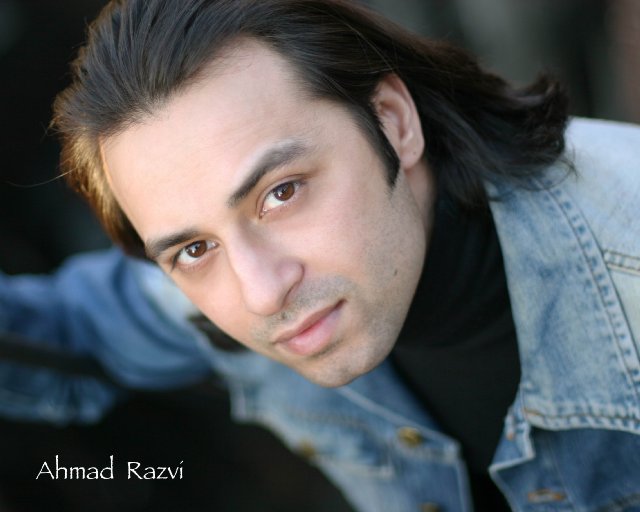 en Sharma when she was presenting her film Amu, what an enjoyable film! And also, getting to dance at the opening night party with the star of Man Push Cart, Ahmad Razvi…guaranteed to give even the most jaded of us “aunties” a girlish thrill! If you haven’t seen the film, you definitely should, here. Enough said about past glories…here’s what’s on for this year!
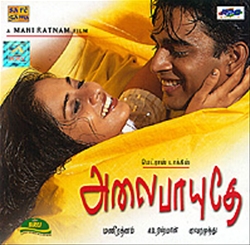
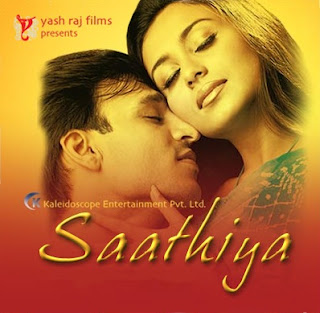

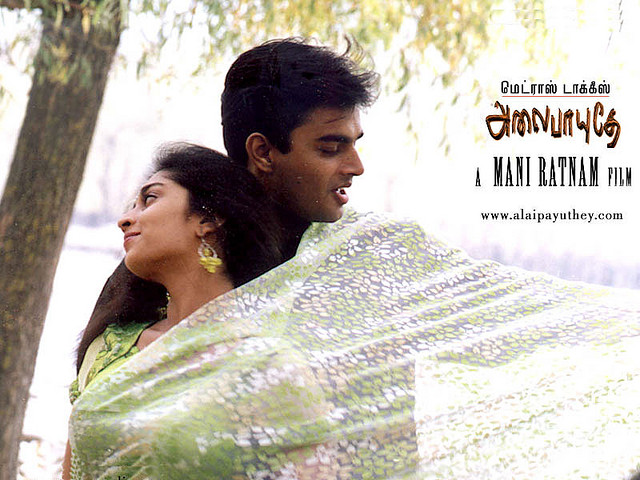

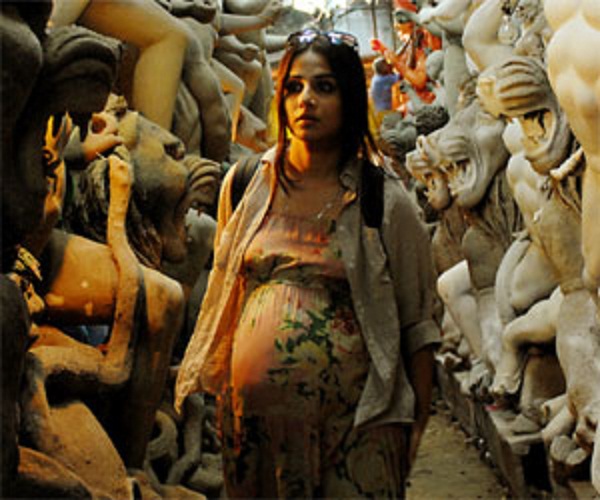


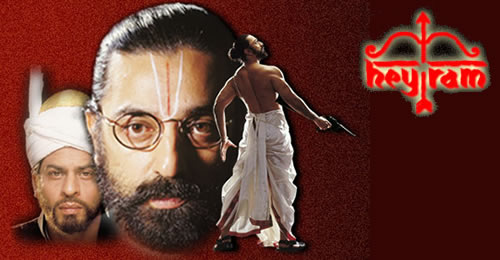

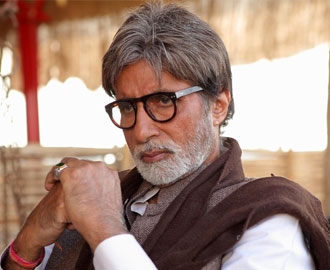
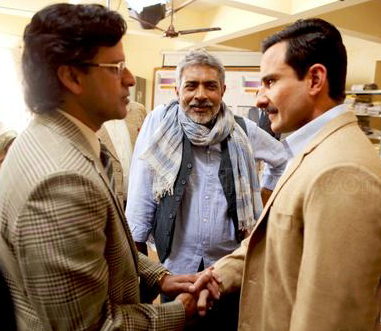


 Jenny Ketcham
 julialmoore
 Filmi-Goris