December 1, 2011: A Suitable Boy suits me fine

I just spent the last month reading Vikram Seth’s A Suitable Boy, 1400+ pages long, ten years in its writing and finally published in 1993.  I selected it because a) although not an award-winner it’s an English language classic  b) I love epic novels and c) it’s about India.  As a piece of literature it is unparalleled for both its scope and characterizations, and for Bollywood addicts it will seem both familiar and highly explanatory.  A novel like this can provide insights into culturally-driven motivations that no film, even the most melodramatic ones, could handle.  I simply adored it.

The time period is 1951-52 and the setting is (primarily) the fictional state of Purva Pradesh, in the the fictional city of Brahmpur, a large university town along the Ganges that seems to be a couple of days’ train ride to both Lucknow and the “big city” of Calcutta.  The story centers on three extended and interrelated upper-middle-class families–the Mehras, the Kapoors and the Chatterjis–and their friends, the family of the Nawab of Baitar (the Khans).  Every character in every family, as well as several of their friends, acquaintances and bosses, gets a narrative arc.  Some of the tales are poignant, such as feckless and citified Maan Kapoor’s sojourn in a rural village where he learns some key life lessons, and a tragedy that befalls a young character during a religious festival.  Some are joyful–I loved the story of Savita Mehra Kapoor’s pregnancy and birth experience.  And, frankly, some of the narratives, particularly those discussing finance, verge on boring.   Seth even inserts himself, as a character writing a very long and meandering novel.

Although the thread tying the novel together is Mrs. Rupa Mehra’s search for a suitable boy for her youngest child, Lata, to marry, it
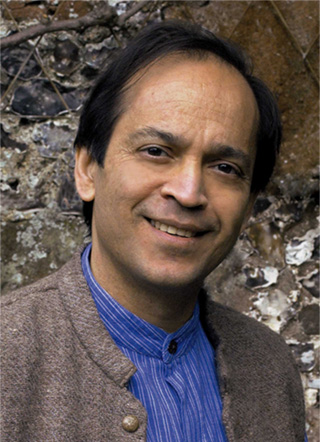
Author Vikram Seth

actually ranges very widely from city to rural village, from politics to academia to industry, to religion and cultural customs, to fashion and movies and literature and food and gardening and law enforcement and astrology and…you get the picture.  In fact, I can’t think of anything that isn’t addressed in some form in the novel.  Love, or rather, marriage, is the book’s central theme, with Lata accumulating no less than three suitors and proposals and trenchantly observing several other marriages for clues as to which choice will be best for the life which she intends to lead.  (interestingly–the choice of no-choice does not occur to her despite several unmarried-woman role models)  Who will she choose?  Will it be Amit Chatterji, the published writer ten years her senior but with whom she has so much in common?  Or will her mother’s preference prevail–the up-and-coming shoe executive Haresh Khanna who has not a few personality flaws?  Or will Lata follow her heart and marry Kabir Durrani, a fellow college student who is the one boy her family has deemed completely off-limits to her because of his religion?
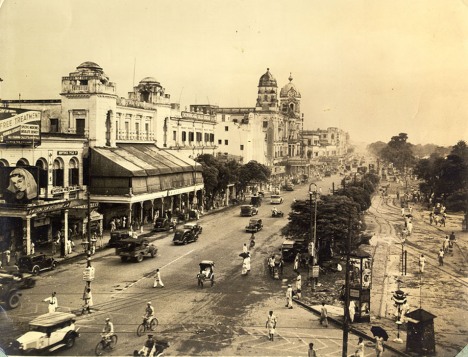
Calcutta, c. 1950

Even though translating this novel to the silver screen would be absolutely impossible, I could see it done on television as a mini-series.  In fact, it was released as an episodic, five-hour  BBC radio play in 2002 with some actors Bollywood fans might recognize:  Boman Irani, Roshan Seth, Rahul Bose and Ayesha Dharkar.

But as a novel it’s as entertaining and diverting as Bollywood’s best.  Described by most readers as “Jane Austen meets Tolstoy,” A Suitable Boy will likely excite devotees of the Yash Raj imprimateur, stuffed as it is with cultural mores, wicked characterizations (Meenakshi Chatterji Mehra is hilarious in her social-climbing vacuousness, a perfect match for her husband Arun Mehra’s Anglified snob), oh-no-she-didn’t gossip, affairs, secret identities and several instances of unrequited love (some of them hideously tragic) before the inevitable happy ending.  There are even song interludes–or rather, poetry interludes that serve the same purpose as filmi songs.  One can have a great deal of fun casting the novel as a film from among current stars, and in fact I would encourage it to make the book come even more alive.  There is even a bit of film fandom:  the characters are obsessed with the current film release, the Nargis/Dilip Kumar starrer Deedar, which has been showing to packed audiences for months and its songs are on everyone’s lips.  This movie is described in the novel as being so emotional that it makes grown men sob uncontrollably, and has “…an unusually tragic ending, but one which did not make one wish to tear the screen apart or set fire to the theater.”  In fact, it is so popular that the ticket-buying queue retaliates on an annoying woman by blurting out the ending, spoiling it for her.   In short–it’s the perfect movie. (watch it online free here, unfortunately without subtitles)

And for those who completely fall in love with A Suitable Boy and want more, rest assured that Seth is working on a sequel called A Suitable Girl, set in modern-day India and nominally concerned with 80-year-old Lata’s search for a match for her grandson.  Even though it’s set to publish in 2013, look for it in…oh…2020 or so.  (I’m so mean)
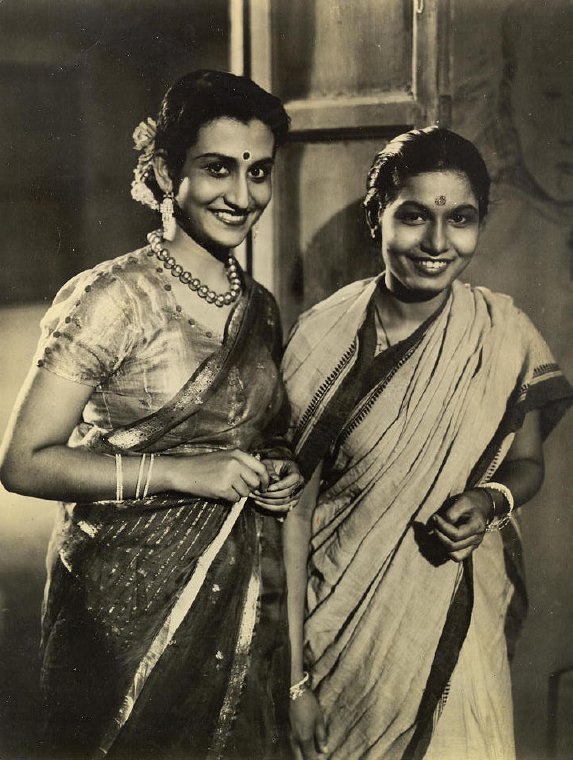
Calcutta beauties, c. 1950
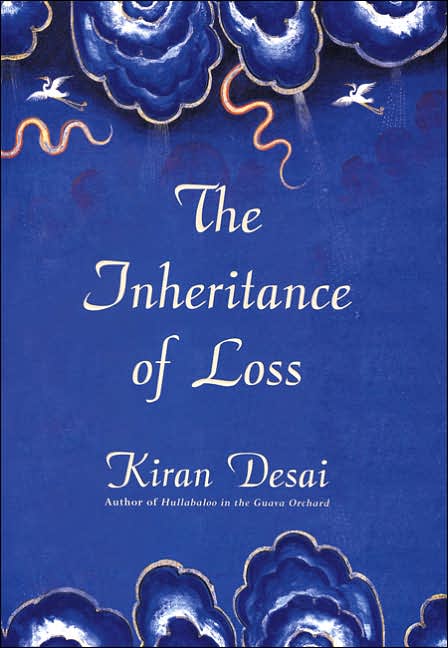
October 12, 2011: Books for Bollywood Lovers

As you may have realized by now, I am a geek and therefore a reader.  In fact, following Indian films for the past six or seven months has seriously cut into my reading time.  But as a literary fiction addict and a new inductee into the world of Indian film, I was particularly thrilled to notice that three Man Booker Prize*-associated novels are perfectly compatible with film enjoyment and over the past couple of months I have eagerly devoured them.

If you are in love with the beautiful Himalayan setting of films we’ve discussed in this blog like Professor, Barsaat Ki Ek Raat, The Blue Umbrella, Jab We Met and Jo Jeeta Wohi Sikander, as well as in the hundreds of other Bollywood productions and item numbers filmed there, try reading The Inheritance of Loss by Indian-born, US-based novelist Kiran Desai (Man Booker Prize winner, 2006).  Set on the India/Nepal/Sikkim border during a Ghurka uprising in the mid-1980s, Loss is simultaneously a girl’s coming-of-age story, a meditation on the changes time has wrought to a particular Anglicized lifestyle, the plight of the not-well-educated NRI in America and the horrors of political turmoil, all with loving descriptions of the gorgeous local landscape and buildings.

Sai Mistry is 16, a British-educated Indian girl living with her retired grandfather in a crumbling yet still elegant house outside of Kalimpong. She is in the flush of first love with her tutor, a local Nepalese youth sympathetic to the Ghurka cause. Her grandfather is very bitter, raised to expect certain things as a Cambridge-educated man in pre-Partition Delhi but having had to settle for the life of a rural judge in the Himalayas. Lack of funds has led them to dismiss all but one servant, their cook, whose life savings has just been given to his son Biju so he can emigrate to a better life in New York.  Unfortunately Biju, with little education and virtually no English, can only find hard labor in the city’s ethnic kitchens for minimal wages as he moves about evading the INS and learning that America is not the land of opportunity it’s cracked up to be. As the novel progresses, its chapters alternating in perspective between Sai and Biju, we learn about the grandfather’s upbringing and early adult life, the circumstances under which Sai came to live with him, and the lives of other village denizens, all of whom have in common a reduced quality of life, shattered dreams and uncomfortable reactions to the swift changes Indian culture is undergoing.

I found Loss beautiful and touching, not a little sad, the language at times a thicket of imagery requiring some time to penetrate, but ultimately a testament to the human spirit.  To my (admittedly little) knowledge there are no plans to turn the novel into a film, but if there were, I can easily see Sanjay Leela Bhansali, with his love of rich fantasy-like detail as is evident in films like Devdas, as the perfect director.

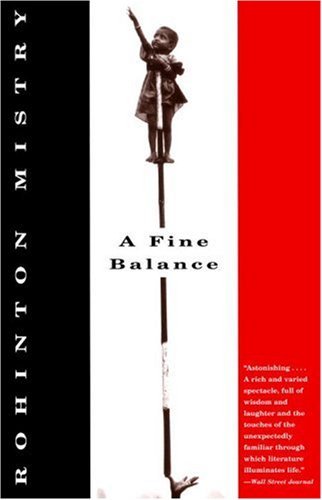
If you enjoy the reality-based, epic-feeling films of Deepa Mehta or the intimate characterizations directed by Aparna Sen, you might enjoy Rohinton Mistry’s A Fine Balance (Man Booker Prize shortlist, 1996).  Between the main characters’ detailed backstories (often including those of their parents as well!) and the epilogue, the novel encompasses episodes, often horrific, of both village and city life from the 1920s to the 1980s.  However, the main action takes place in the course of about a year starting in 1975, at the beginning of the Emergency declared by Prime Minister Indira Gandhi that had the unintended consequences of terrible human rights atrocities.  Mistry himself was born and raised in Bombay, and emigrated to Canada as a young man in 1975 during the Emergency.

Dina Shroff Dalal is a middle-aged, middle-class Parsi woman, tragically widowed in her youth, who takes in a college-student boarder and runs a small (two-worker) garment factory in her house in order to make ends meet and stay independent of her controlling older brother.  Her boarder, Maneck, is the son of a fellow Parsi school friend, the friend having moved to the mountains upon her marriage and reluctantly sent her son to the “city by the sea” (never named, assumed to be Bombay) to get a certificate in the up-and-coming field of refrigeration and air conditioning. (remember: 1975!)  Her workers are Ishvar and Om, a Hindu uncle-and-nephew pair, who have been ostracized from their village for having dared to independently upgrade their caste from cobbler to tailor.  They are also suspect among their fellow Hindus for their utter lack of hatred towards Muslims.  All of the main characters are emotionally damaged but they have inner strength; the tale of how they live (the Ishvar-Om sections are heartbreaking), learn to trust and even love each other, and rely on each other to survive a politically, economically and socially difficult historical time, is ultimately uplifting and the stuff of the serious end of Indian films.

AFB is very easy to read, with clear language that is nevertheless evocative, a tight plot and familiar dialogue.  Since this is literature, astute readers will notice certain minor characters and devices that form circles and arcs, teach lessons and support the main story in exceedingly artistic ways.  A warning:  if upon reading this book you internalized the characters and the time period, and understood (if maybe not liked—I guarantee that you will experience some anger) the incidents which came upon them at the close of the main action, you might want to skip the epilogue, which looks in on the characters in the year 1984.  It is very difficult to read.  I admit that I cried a little.  The novel has been adapted into a play, but I think it would work extremely well as a film.  If I were casting it, I would tap Shabana Azmi to play Dina, Imraan Khan as Maneck, Naseeruddin Shah as Ishvar and for Om…well, find me a scowly teenager, nothing remotely chocolate about him, with a flaring anger and resentment of the world.

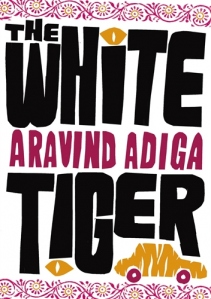
If you like smart-mouthed and cynical modern heroes (and anti-heroes) such as those played by Shah Rukh Khan, check out The White Tiger by Anglo-Indian novelist Aravind Adiga (Man Booker Prize winner, 2008).  A present-day, first-person narrative written as a series of letters to the Chinese president by a snarky youth, Tiger details the pervasive corruption, casteism, and just plain lack of funds that combine to block a young man’s entrepreneurial dreams.  The ways he uses his wits and a willingness to break longstanding cultural taboos in order to get ahead are as entertaining as they are shocking.

Balram Halwai, who we learn on the first page is an admitted murderer, begins his autobiography as a clever boy living in a village in rural Bihar, nicknamed “White Tiger” by his schoolmaster for the way he stands out from the other children yet unable to camouflage himself and his gifts within the prevailing culture.  Poverty forces him to quit school, and he uses his imagination (and not a little fakery) to upgrade himself to the job of driver in the household of a wealthy landlord.  The landlord soon asks him to drive for his son, who is moving to New Delhi, and this wider view of the world both intrigues and disgusts Balram.  The resourceful Balram becomes even more aware than he was of the extremes of Indian society and the causal relationship of corruption to wealth and power.  Ultimately, he realizes that the only person looking out for him is himself and if he wants a piece of the “new India,” he has to let go all of his previous assumptions about morals and do whatever is necessary to achieve his desires.

Those whose tastes run to the appreciation of traditional Indian family values as promoted in Bollywood films might find Tiger’s narrative arc and irreverent tone fundamentally distasteful.  However, I found Balram’s voice funny, satirical and refreshingly real in a world that still has illusions about what modern India is like.  Smuggler Films’ John Hart (The Revolutionary Road) has acquired the film rights to The White Tiger, Mukul Deora (Bheja Fry 2) is one of the producers, and Haneif Kureishi (My Beautiful Laundrette) is set as the screenwriter.  The Chennai-born Adiga has jokingly said that he has in mind the perfect actor to play Balram…Rajinikanth.  (he goes on to say that there is “only one” actor in Hindi cinema who could play Balram, and we can probably guess who he’s thinking about.  Another “dream cast” can be found here)

And there you are.  Three literary novels that may deepen your appreciation of Indian films–or that your love of Indian films might excite you more about.  In a way I hope none of them make it to the screen—I much prefer the scenery in my head as I read than to subject my vision to that of someone else, no matter how excellent it might be.  I have several other works in a similar vein scheduled to read and comment on, so consider this the first of a (mercifully short) series.  Jenny and I have also vowed to read (or in my case re-read) Salman Rushdie’s Midnight’s Children and comment on it before it comes out as a film towards the end of 2012.

*The Man Booker Prize is a 43-year-old, annual and very prestigious award for contemporary fiction written by citizens of British Commonwealth countries plus Ireland.  The selections are known for their high literary quality as well as their accessibility to general audiences.  The 2011 award should be announced soon.

August 13, 2011: Mmm, samosas.

Julie M:  Happy Saturday!  Jenny is AFK [away from keyboard] for a good part of the weekend so I thought I’d post to call attention to a resource that I plan to use to increase my enjoyment of the ENGLISH part of Indian films.

Here was our brief conversation earlier this week:

Julie M:  Did you see this article on Indian English and the Samosapedia?
http://www.economist.com/blogs/johnson/2011/08/indian-english

This could clear up a lot of differences between what we see in subtitles and what we hear in the original film dialogue, and would add texture to our enjoyment. Or maybe I’m just a big ol’ language nerd, that I think it’s cool. I signed up for the “Daily Chutney” email from Samosapedia and clicked around in the dictionary for fun. Great way to waste time (as if I didn’t already have enough methods).

Jenny K:  I love that Samosapedia site, it’s darned addictive… Quite an education. Thanks for sending it!

So I flashed on a filmi-English phrase that hear all the time, “Don’t take tension,” the meaning of which I could sort-of infer from context, and looking it up on Samosapedia brings this:   “A phrase typically used to calm anxiety.”   I was right on that.  However, looking up “Roadside Romeo,” which I thought meant someone who loafed on street corners whistling at girls, brought this more specific meaning:  “Slightly tragic Indian male figure hanging outside women’s colleges dressed to impress.”   And “First Class,” which I could assume meant wealthy and impressive, has a bit of a shade of meaning as the absolute tops, best of anything and is typically applied to food, which I hadn’t noticed before. Finally, I’ve been confused why they say “only” constantly, and consulting the Samosapedia reveals that it’s a word used to emphasize whatever the rest of the sentence is saying. The phrase “I am like this only” means “I can’t help it.”  Who knew?

Anyway, I’m going to look at the untranslated English in the films a bit more closely now, and run to Samosapedia to get the “real” translation.

August 9, 2011: Lovers and Other Burning Subjects

Julie M: Watched Atithi Tum Kab Jaoge [Revered Guest, When Will You Leave?]…somewhat funny, mainly due to Paresh Rawal. Ajay Devgan and Konkona Sen Sharma were serviceable, but as primarily dramatic actors I felt they were wasted in the comic aspect of their roles. A few genuine laugh-out-loud moments. Why why why do they have to insert those stupid boing-boing noises?? Would have been funny enough without them. And from the beginning I knew what the very end would be. Overall–I don’t generally watch this kind of farce-comedy in English (OK, I admit to watching and enjoying Hot Tub Time Machine but deeply regretted saying OK to The Hangover and Are We There Yet) and probably won’t watch more in Hindi either.

Here’s the trailer with English subs.

I think the fact that it was backed by Warner Brothers tells us a lot. This song is probably the best part of the movie:

No subtitles but you get the idea from the action that they are frustrated with this guest and want him to leave.

[Next day]

Julie M: Saw Sholay [Embers] last night. Two things I wish I’d known going in: that it was 3-1/2 hours long, and that it was a WESTERN. I Hate Westerns. From the first plot intimations I kept flashing back to The Magnificent Seven, except the village-protectors were somewhat-comedic crooks instead of professional gunmen (now picturing in my head The Three Amigos, who, despite being actors rather than crooks, were comedic), and there were songs and dances. It seemed only vaguely Indian…in my mind I kept calling it a “curry western”…everything was there: riding around on horseback, the dusty landscape complete with cactus, the rich rancher, the thirst for revenge, gun battles, the innocent townspeople, gun skirmishes before the Final Stand, etc. Even a train robbery. So this is an Indian classic? Hmph.

Having said that, I loved Amitabh’s character and the interplay he had with Dharmendra’s character. Even though he only wore one outfit in the entire movie he looked awesome in it (those legs! those hands! that hair!). And I thought it was funny that I had just seen ATKJ where there was an extended Sholay reference, and then I saw Sholay and viewed the source of the reference. And even though I Hate Westerns, I tried really hard to get past the conventions to see the life lessons: not giving in to bullies, grabbing some fun while you can, and the true meaning of friendship. (I could have done without the slapstick Hitler-parody jailer, though)

Here’s the opening scene:

My favorite song (probably everyone’s favorite too):

Note the orchestration sounds like the old Westerns too…

And if you want to see the scene they refer to in ATKJ, here it is.

I couldn’t find it with English subtitles, but essentially the villain (Gabbar Singh, the one with the beard) is berating his crew for letting two (how many? TWO! how many? TWO!!) strangers get the better of them, and exacts punishment. The guy on the right is the older actor that Chachaji pesters on the film set in ATKJ.

Anyway, I’m glad I watched it but will be sure to warn people that if they don’t like Westerns they will likely not enjoy this film. I can’t say that I entirely enjoyed it although there were moments that I recognized as “classic”.


Jenny K:  Sorry about that, I thought I had mentioned that Sholay was a Western, but maybe not. My mom had just the same reaction to the Hitlerized Jailer, too. “Speed up past that bit, let’s get back to Amitabh!” She didn’t like the “silly stuff”. And on the whole, I agree.

I thought Paresh Rawal was wonderful in ATKJ. He’s so versatile in things, hilarious, then touching, sometimes even in the same scene.  Though he does do more in comedy than anything else, I know he’s done a good bit of drama as well. He says he’s most proud of a movie he did last year, Road to Sangam, about a mechanic charged with delivering Ghandi’s ashes back home

and Sardar, a bio-pic he did a few years earlier, about Vallabhbhai “Sardar” Patel, a compatriot of Ghandi and Nehru who fought to keep all religions safe during partition. The movie’s on YouTube (in 16 parts, with subtitles) I haven’t watched it yet.

Julie M:  One of the movies I reserved from the library for this weekend is The Legend of Bhagat Singh. Can’t wait!


Jenny K:  As I remember it, Ajay did a good job, of course, but he seemed a tad old for the role. Bhagat Singh was 24 when he died. But that doesn’t seem to stop anyone in film these days, if they want a role. There was at least one other version of the story being filmed at the same time. This one with Bobby Deol in the lead…yet another over-thirty trying it on for size. I think Ajay’s beat Bobby’s to the cinemas, and I believe did better at the box office. I think it was a bit slow for my taste, but Ajay was very heroic.

The multiple Bhagat Singh films explains a joke in KHNH, I think, where Preity’s suitor came to the house with lots of kids in turbans, and when they are introduced to the family all are named Bhagat Singh, of course a very popular Sikh name, but not usually in multiples. When the family looks confused the father says something like “You can never have too many Bhagat Singhs!” This was just the time the other films were in the pipeline and making lots of press.

Though I will say, not having seen the Bobby Deol version…he looks a bit more like the pictures of Bhagat Singh that have come down to us in the papers of the day.  Both too old though.

[the next day]


Julie M:  Well, Saawariya [My Beloved] was a bust. The library DVD was all scratched up and it won’t work for more than 20 minutes at a time on any of my players or computers. I got a bit more than halfway through, watching in bits and pieces, and gave up. But from what I saw it is stunningly beautiful visually, and I loved how it was done kind of like a staged play. Not the least of the stunning visuals was Ranbir…this number just about made me faint, and I’m sure I wasn’t the only one.

But then his hair inexplicably turned Beatle-esque (Ringo, I believe) and the bloom came off the rose a little. Still, he’s adorable and I could definitely stand to see more of him (but not THAT way—more of his acting! Acting!!).

This number was cute too:

Overall, too gushy of a story for me to exert the effort to finish the DVD (you know me, I am not the gushy romantic type) and I cheated online to see how it ended. Meh, for the storyline. If it were not directed by Sanjay Leela Bhansali it would have been ordinary and boring.


Jenny K:  I may have a copy of it if you wanted to see the ending. Not sure, I think I picked it up in a discount bin somewhere. Blockbuster, not the pirated ones. That scene with Ranbir and the towel was a BIG scandal when it came out, but I remember thinking at the time when I saw it on the big screen that it wasn’t worth all the furor. They spoke in the reviews as if he were completely naked, but unless you were his neighbors across the street, you didn’t see it all…and it wasn’t necessary. I think that when he fell off the chair and was seated on the floor that I saw a pair of shorts on him past the edge of the towel in one shot. Still and all, he is a cutie. Yes, you definitely should pick up a copy of Bachna Ae Haseeno. I think it’s his best so far.


Julie M:  I’ll try to find BAH. It’s not at the library, so I guess I’ll have to get it another way. Sigh.

[Pusher’s Note: It’s available for rental at YouTube… ]

On another, and seriously disappointing note, it seems as if the my local theater here has stopped showing Indian movies, just since I saw ZMND there a couple of weeks ago. That means my closest first-run theater is now in Chicago. Grrr.


Jenny K: Don’t give up hope.  A lot of the theaters that carry Hindi films can’t afford to show them without the big crowds, so they only book them for a week, or at the most, two weeks so the locals learn to come early or miss out.  Then the theaters go back to programming American films in between.  It’s especially true at multiplexes, where only one or at most two theaters are dedicated to the South Asian community’s films.  Check again in late October.   Don 2 is coming out for Diwali… your theater will book SRK.  And I’ve heard a rumor that Hrithik is doing a cameo in it.

August 8, 2011: Handling the Obvious

Julie M:  The weekend has started…watched Kaho Naa…Pyaar Hai this evening. Dumbest. Movie. Ever. Do NOT get me started on the ridiculousness of plot, the awkwardness of action, and the stupidness of dialogue. Plus the entire first half read like product placements for Coke and fancy cars. Favorite stupid moments: Hrithik’s obvious spray tan in the 2nd half, the ENTIRE sequence on the cruise ship and the infamous mesh shirt.  And this one.  Check out the video below and carefully watch the sky as it flips from daylight to dark to evening to daylight and around and around, randomly.

Why did I watch it to the end? Well, you know why.

Jenny K:  Okay, tell me how you really feel about it. I’m assuming that you don’t want to keep a copy of KNPH? I think, if you’ll scroll back that I said, “There are two clips of KNPH that you have to see”. I didn’t say you had to watch the whole thing…you asked for it.

And you didn’t like the mesh shirt? The biggest problem I had with his “look” in this film was its dichotomy. His head, in his down-under look, was much more conservative. Shorter hair, wire rimmed glasses, etc, while the bottom half was…well, packaged for easy viewing, is the phrase that keeps jumping into my head. Sort of gave the impression of a high school gigolo with his inner stockbroker struggling to get out. I think it’s safe to say, Hrithik’s look is refining with age. Didn’t really scare me once in ZNMD, except perhaps, with the contrast vests and the rolled up pants, which I wish he’d take a vow against. It’s like he’s trying to make himself look shorter, or something?!?

Ah, Product Placement! That’s a fact of life in film, the world over. Some producers are just more subtle about it than others. Example, Mr. Subhash Ghai, who brought you Ishq Bina, a “Meet-Cute via Coke” scene in Taal (which I loved, so I overlooked it)

and the even worse, the “Coke as Tragic Memory Trigger” scene, same movie (less forgivable)

well, he went on two years later to commit Terminal Product Placement Saturation (TPPS) in Yaadein. Jackie Shroff is a trouper, (the things SG asks him to do!) but his character is shown as so in love with Coke that he can’t go to the grocery store without clasping a can of it to his manly chest. He seems to be singing more to it than to the images of his dead wife. And I’ve never before considered a Coke-Themed wedding, but the bride doesn’t seem too happy about it either. Chee!

Julie M:  I did notice the Coke product placement in Taal in the middle of MY FAVORITE SONG!! but generally in Indian film it has not been so bad (not as bad as in American films, chee!), until KNPH, where it is egregious. Or maybe I was bored with the movie and it hit me harder. Anyway.

The weird thing I noticed–well, one of the many weird and stupid things–in KNPH was that in the 2nd half his skin was way darker, like, is there more sun in New Zealand than in INDIA??!! or was that to drive home the point that this is supposed to be a different person? I liked the little glasses, actually, but hated hated hated the logo shirts (more product placement, or part of the character?). The cargo pants were, um, delicious, if that’s the right word. But overall, if I want to see the Ek Pal number I can catch it on YouTube, ditto the flashy number from the 2nd half (forget what it’s called). Do not need to own the movie. If I were to actually buy a Hrithik movie (so I can see it anytime, mmm) it would definitely be Dhoom 2. In fact, I’m going to, and hide it in a special place so B doesn’t get jealous. Krrish shows him off pretty well, too. And…sigh…I might just end up seeing Krrish 2 in the theater, kicking and screaming all the way (not!).

[Jenny K’s comment: You’re assuming that B isn’t reading this blog on his own time…]
Julie M: Tonight I am giving myself a Kajol double-feature, with Minsara Kanavu (aka Sapnay) and U Me aur Hum. Drinking iced chai. Wanted to make myself biryani but it’s too hot to cook much, so am making chorizo instead.

[later that evening]

Julie M: Wow. I should NEVER do a Hindi double-feature ever again, no matter how many videos I have to watch before I have to get them back to the library. It was just too crazy much and I am wrung out.

Minsara Kanavu was fun but had several key flaws. Far too many slapstick-y moments, and I couldn’t understand her attraction to the Deva character (who I could have sworn was gay, and not just because he was a hairdresser). For that matter, the entire ending was just unbelievable. Great Rahman music, although this number (note the product placements!) was more Broadway than Bollywood:

Kajol was adorable.

U Me aur Hum was typical. Meet way too cute, then huge melodrama in the 2nd half. The WQ (weepiness quotient) was turned up to 11–maybe the highest I’ve seen since KHNH–and even though I saw it coming for about 45 minutes I still bit and, yes, cried a little at the end. It was great in the first half to see Ajay smiling, laughing and happy since I’ve not seen it enough in the films I’ve seen him in. The second half had amazingly real, incredible, emotional performances by both Ajay and Kajol (disappointingly, in the next-to-last scene their “old” makeup looked obviously fake and bad which put me off liking it as much as I could). The music did not strike me as anything special…except the drunk number “Dil Dhakda Hai” was fun.

I think that Ajay does better in films where he is not called upon to “sing” even though he did slightly  in this one song. He just looks too uncomfortable.  Maybe it’s all the strippers.

I haven’t decided yet what I am going to watch tomorrow, but I have to watch two. I’ll definitely split them up…watch one early in the day and one in the evening. And get out of the house in between, for sure.

Jenny K:  Try yourself a triple feature sometime, but not until you’ve been in training a bit longer. I think it involves doing serious shots of chai, alternating with ladoos (for the sugar rush) and short bursts of bhangra dancing in between shows to send the blood back into your feet. I’ve only tried it a few times at high density film fests, usually involving Bachchans.

A few years back, Filmfest DC programmed Bawandar (with a planned visit from Nandita Das, that didn’t happen that day) and two presented by BigB himself (with LittleB in tow), Dev and Black. I gathered my few senses left me and raised my hand to ask AB, Sr. a question…and he picked me, looked straight at me with those intense eyes, and expected me to be coherant…tall order. I think I managed it, as he nodded and answered it, but I don’t, to this day, remember what he said, as all my concentration went into not falling over and mumbling something along the lines of “I love your…eyes…I mean… movies, and can I stow away in your luggage?” I settled on smiling and nodding a lot.

Oh, about Sapnay, I do remember it being sorta Disneyesque. Kajol’s character could have been played by Haley Mills in her heyday, if she coulda handled the Tamil, but I thought it was sweet. And I’m glad you said Prabhu Deva’s character seemed gay (I’m betting he was going for kookily carefree, with those long legs, it would be an easy option, I’m thinking). He’s thought of as quite the ladies man in real life, I hear. And I think I’ve said before that he’s one of my favorite choreographers (Hrithik’s “Main Aisa Kyon Hoon” from Lakshya and Madhuri’s “Kay Sera” number from Pukar) and he can do no wrong, dance-wise, in my eyes.

Julie M:  Great number! He kind of reminds me of a younger, Indian Tommy Tune with a dash of Fosse. Maybe it’s the height and the legs.

Bollywood Shell Shock, Part II (Julie’s Story)

Here’s my intro post.

I alternately bless and rue the day that Jenny and I found each other again on Facebook and I learned this weird new fact about her, that she was a Bollyfan.  I mean, we were BFFs for 4 years 30 years ago and I thought I knew her, but who could have predicted it?

But I had my own fascination with India, which started in grad school where I was studying art history and learned a bit about Indian art and culture, enough to know that it was both strange (not weird, just new to me) and beautiful.  Then I fell in love with movies about Indian people by NRIs and others (Bend it Like Beckham, Monsoon Wedding, Outsourced, Slumdog Millionaire, The Namesake among them), loving the song and color and drama.  Which turned to a love of books by modern Indian authors, Arundhati Roy, Jhumpa Lahiri, etc.  (yes, even the chick-lit, I will admit)  Which naturally led to a predisposition towards The Evil One’s influence earlier this year (2011), first with filmi music, then the actual films.  And it led to purchasing music on iTunes.  And listening to the “Contemporary Bollywood” channel on Pandora.  And considering naming my new kittens Didi and Bhaiyya. (don’t worry, I didn’t)

It’s all Jenny’s fault. And I cheer her for it every day, because who else would I talk to about it?  So I guess I get to play the role of Totally Clueless Newbie to her Wise Guide, and you get to come along too.

  • Categories

  • Blog Stats

    • 77,360 visits
  • January 2026
    S M T W T F S
     123
    45678910
    11121314151617
    18192021222324
    25262728293031
  • Archives

  • Enter your email address to subscribe to this blog and receive notifications of new posts by email.

    Join 24 other subscribers