
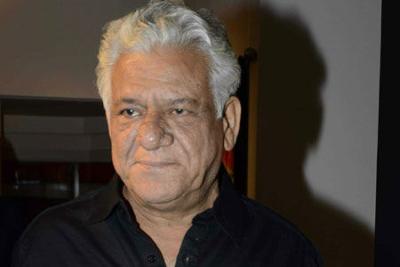
Julie M: Indian film lost one of its guiding lights on January 6. Om Prakesh Puri was best known as a character actor—his appearance did not lend itself to lead roles in films that wanted to be popular, and he was definitely no chocolate hero. He worked on stage, in television, and in film, first in “art” cinema, later in mainstream Bollywood. I don’t recall seeing him dancing or singing, though: he always seemed to be too serious an actor for that. Puri was the crossover actor that all Bollywood actors dream of being: fluent in several languages, he worked without prejudice in Indian, Pakistani, British, and American films. His rough looks and gravelly voice as he aged often landed him roles as either a police officer or a stern father/father-figure, frequently positive ones, occasionally ambiguous, rarely 100% negative. As an indicator of his “type,” his name is often thought of when one thinks of actors like Naseeruddin Shah (the Filmi-Goris perennial fave and Puri’s longtime good friend), Shabana Azmi, Amrish Puri (no relation), and Smita Patil. He was the “angry young man” before Amitabh Bachchan, and appeared in later films like Rang de Basanti and Yuva, both serious films about young people coming into awareness of their political obligations (although in Yuva, he played a corrupt politician who is threatened by the young upstarts).
American audiences may remember seeing him in Gandhi (1982) as the character who killed a Muslim child because a Muslim had killed his son, and wants some kind of absolution from Hell through Gandhi. It was a pretty intense one-scene cameo for him early in his career and I believe it was his first non-Indian film job.
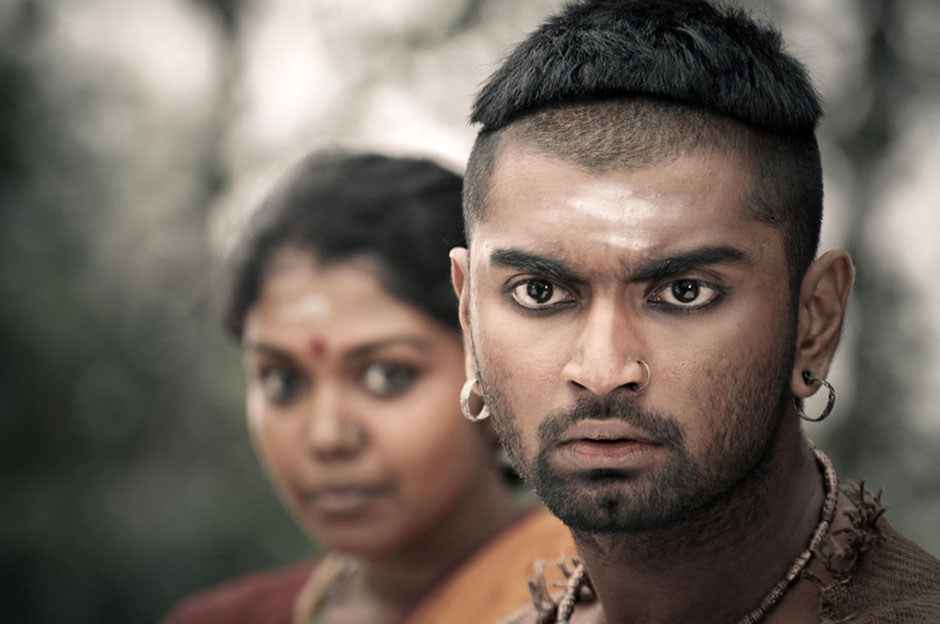
Puri had already won the Filmfare Best Supporting Actor award in 1980 for the dramatic and heart-rending art film Aakrosh (aka Cry of the Wounded). In it he played, nearly silently, a peasant whose life is one of such unfairness, dehumanization, loss, and violence at the hands of others that he commits a heinous, violent act of his own simply to prove that his entire life and those of his loved ones won’t be known for complete victimization. WARNING: this is very difficult to watch. The role in Gandhi, however brief, brought back, to those who had seen Aakrosh, a similar character who had the opportunity to make a very different decision.
Jenny K: In a similarly visible US film appearance in Roland Joffe’s City of Joy with Patrick Swayze and Pauline Collins, Puri played a Calcutta rickshaw driver with such detail and determination that he impressed even the New York Times, though the film itself didn’t do well. Here’s a bit of his biography, remembering that film, chronicled by his ex-wife, Nandita.
Julie M: Puri could also handle silly comedy as well as the more serious dramatic roles. One of my personal favorite Indian films is the 1997 Chachi 420 (Fake Aunty), which was inspired by the American film Mrs. Doubtfire. As Banwari Lal, he is instantly suspicious of “Lakshmi” (the fake-female babysitter for his employer’s granddaughter), and pits himself against her repeatedly as she thwarts his plans to siphon off his employer’s money. Here’s a great scene with Banwari comically spying on her as she walks through town (there is dialogue but no subtitles are necessary).
As in most farces, there is eventually a comedy of mistaken identity, and this one involves Banwari in a hilariously complex way. At the end he learns the truth about Lakshmi, but has committed so many evil deeds that he cannot reveal what he knows lest they all come out publicly and ruin him.
Jenny K: That looks hysterical, but in addition to a light touch with slapstick, Om Puri could be funny with just a look or a gesture, bringing an indelible quality to what would, in other hands, be a rather bland supporting role. Take his part as Pandit in Vishal Bhardwaj’s Maqbool(2003)…a fabulous film, but paired with his old school chum Naseeruddin Shah again, as Purohit, they play policemen/city officials who bring real color to the usually bland “chorus” role in this Macbeth adaptation. They completely had me laughing from the get-go.
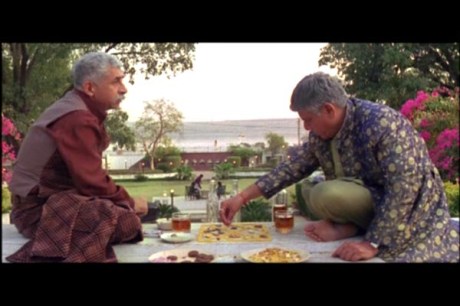
(Screencap thanks to Amrita Sen on the Borrowers and Lenders site. I could not find one, and no pic would be a crime!)
Julie M: But his roles as a gruff father trying to resist change are the ones that I think a lot of people would remember him for, and two of them are conveniently filmed in English. In 1999’s East is East (and its 2010 sequel West is West, which we reviewed here), Puri earned international acclaim as the patriarch of a British-Pakistani family. As George Khan, he is dismayed that his British-raised children won’t respect Pakistani traditions and is abusive to them and to his British wife. In this scene, George is upset that his youngest son is faking that he is not circumcised in order to fit in with the other boys.
Although played as comedy, Khan’s struggles with his family’s identity rang serious and true among not just Pakistani immigrants to Britain, but among any bicultural families torn between the old ways and their new homeland. In 2014’s The Hundred Foot Journey, Puri plays Papa Kadam, an Indian immigrant to France whose smelly, casual Indian restaurant is a nuisance to Helen Mirren’s Madame Mallory, who runs a classy Michelin-starred French restaurant just across the street.
They become instant enemies: in this scene, Papa has bought all the pigeons in the market so Madame cannot make her restaurant’s signature dish. He doesn’t say a word in the scene, but he is so good at the character that you know all you need to just from his face. The journey he takes from stubborn ire to protectionism, to eventual détente and maybe something more, is again one that is familiar to any immigrant.
Jenny K: What I constantly marvel at is how a man with such an instantly recognizable face and voice can give such a variety of characterizations in the body of his work. I remember going to see Mirch Masala (1987) during the Kennedy Center’s Maximum India festival back in the spring of 2011, and almost didn’t recognize Puri at first, who, at 37 was playing an old caretaker of sixty-some. He was always playing older, at least by the time I began watching Indian films in the eary 2000’s. And, because of that, it’s hard to believe that he left us at only 66!
Mirch Masala is one of those dramas of colonial India that play so well, especially with its stellar cast. Naseeruddin Shah is epically slimy as an evil governmental officer, or Subhedhar, who uses his position to harvest the countryside for taxes and other “side benefits.” On his rounds one day, he sees a particularly lovely, but married, woman, Sonbai (the feisty Smita Patil), at the banks of the river, and tells her what he expects from her. She flouts him and runs away to hide in the local warehouse yard where the chili harvest is dried out in the sun. Abu Miyan (Om Puri) is the factory watchman, or chowkidar, who stands alone with the women in their defiance of the subhedar’s demands for Sonabai’s surrender. Even the mayor of the town is against them, thinking that the cost of one woman will be worth the loss of the whole town. Sometimes the film leans toward the melodramatic, and Naseerji twirls a particularly fine moustache, but I really enjoyed the film and Om Puri’s noble character. [Sorry, no subtitles, but the visuals are vivid!]
Another old favorite of mine for its classic cast and solid performances was Disha (1990), our review, here. Puri’s performance as the “crazy” older brother, Parshuram or “Pagal Parsa” who sticks to the farm life and the continual digging of his family’s well, is the rock on which the whole story is built. The whole film is a picture of how poverty in the countryside sent multitudes into the city to better their family’s fate, but it usually didn’t. Nana Patekar, Raghuvir Yadav and Shabana Azmi are also wonderful in it.
Whatever role he took, Om Puri left us with a clear picture of the person he was trying to share. It was a gift, rich with detail, charm and passion, subtle or broad, always perfectly delivering the director’s intention. That is not a talent that will be easily replaced…if ever. Thank you, Puri Sahib.
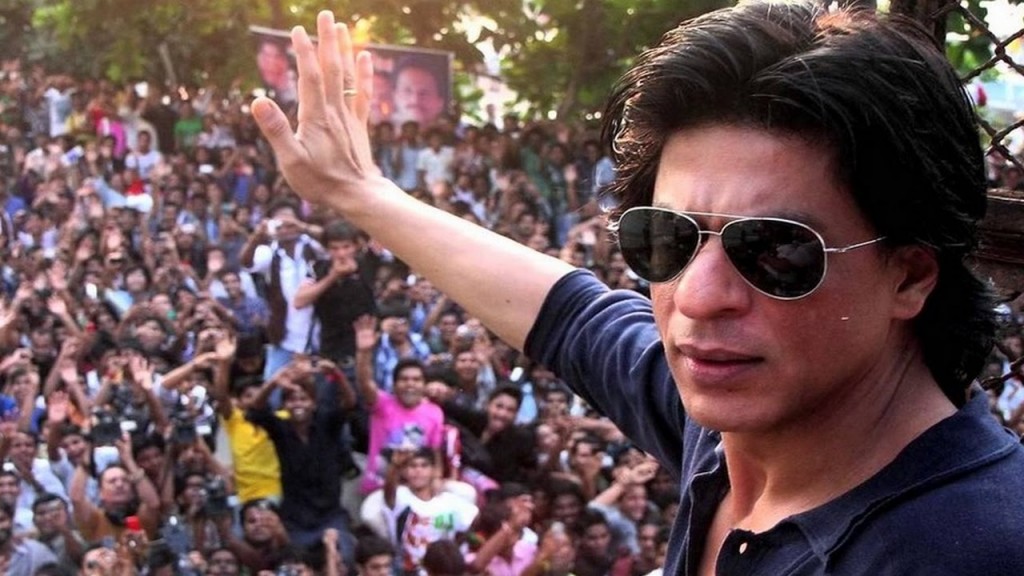


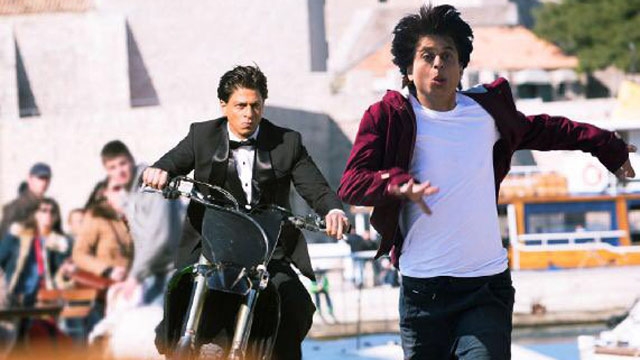
 Julie M: Khan plays Pawan (nicknamed Bajrangi), a devotee of Hanuman who has recently lost his father (a hilarious backstory has him dropping dead of shock after Pawan finally passes his exams after eleven attempts) and is trying to make money to buy a house so he can marry his girlfriend Rasika (an underused Kareena Kapoor). Pawan’s happy life is turned upside-down when a lost, mute little girl (Harshaali Malhotra) attaches herself to him. He knows she belongs somewhere and as he gradually finds out more about her—much of which is disruptive to his simple and narrow world—he vows to return her to where she belongs. In the process he has to deal with completely unknown situations in the best way he knows how: by being himself in a world that seems not to know how to deal with him.
 Julie M: That’s what I mean! I was never bored and the director made me care about every character. Pawan takes the shocking revelations about “Munni” in stride (she can’t speak! she eats meat! she’s a…MUSLIM!!!), which is supposed to be a testament to his innocent nature, should have made me laugh out loud but given the setup seemed only natural. The trope of a small girl teaching lessons to a grown man about acceptance of difference, and then having him teach others, is standard in “film-festival” films but seemed fresh here. The reporter character played by Nawazudin Siddiqui (what is it about that guy—I love him in each and every one of his roles!) had a suspiciously fast turnaround from “get the spy” to “let’s help this guy,” but somehow it made sense. And the overall message of people being people, not countries or political beliefs, is just simple enough to work. And of course, I, along with everyone else (I assume—I was watching it on a small screen on the back of the airplane seat in front of me!), teared up at the end despite myself.
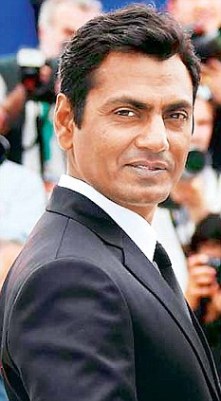 Jenny K: Nawazuddin is one of my favorite actors working today, a dusky Jude Law with many more guns in his acting arsenal (sorry, Jude, you’re still delicious). In the past five years, especially, he’s done a wide variety of characters. Dekh Indian Circus has him playing the mute farmer in a remote country village with poignancy in every silent glance. Kahaani turned the tables completely in a darkly edgy role as the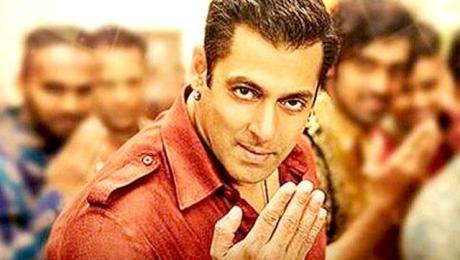











 Jenny Ketcham
 julialmoore
 Filmi-Goris